Jack Benny Spoof of THE HOUSE OF ROTHSCHILD – 1934 Live!

A sure sign of a film’s popularity is when comedians start spoofing it. Jack Benny devoted many of his weekly radio broadcasts to satirizing hit films right from his earliest shows in 1932. Among the films to get the Benny treatment were I AM A FUGITIVE FROM THE CHAIN GANG, Mae West’s SHE DONE HIM WRONG, which Benny turned into “She Done Him Right,” LITTLE WOMEN recast as “Miniature Women,” and even the Charlie Chan films became “Charlie Chan in Radio City.”

One hot summer night long ago in August 1934, the Benny troupe (Mary Livingstone, announcer Don Wilson, Sam Hearn and singer Frank Parker) were broadcasting from New York City and tackled Mr. A’s hit film of the season, THE HOUSE OF ROTHSCHILD. Renamed “The House of Rawchild” for reasons never made clear, the skit is more corny than clever but Jack Benny’s trademark dry humor is well in evidence. At that time, recordings of live radio broadcasts were not usually made and this is why few shows from that era have survived. Fortunately, Jack Benny arranged with a private company to record this AM transmission off the air on to discs lasting about five minutes each. The side joins of each disc lost a bit of dialogue and static noise from the AM reception also can be heard. We have restored the sound by minimizing the surface noise from the discs as much as possible and improving the tonal quality somewhat, but allowances should be made considering that this broadcast should not even exist under the circumstances. Due to the sound quality, we have omitted Jack’s opening routine where he relates his trip to Atlantic City to cool off in those pre-air-conditioner days.

That said, just click on the arrow below and return to Friday night, August 24, 1934, just past 10:30 pm eastern time for apparently the only known spoof of a George Arliss film:

Jack Benny as he appeared at the time of this broadcast:

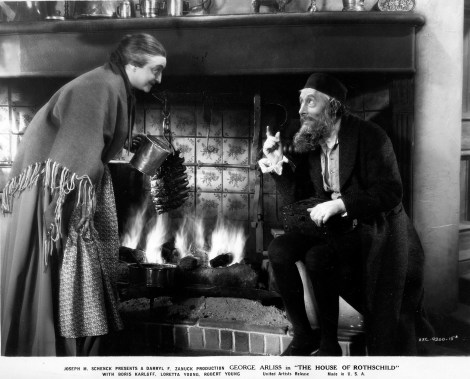
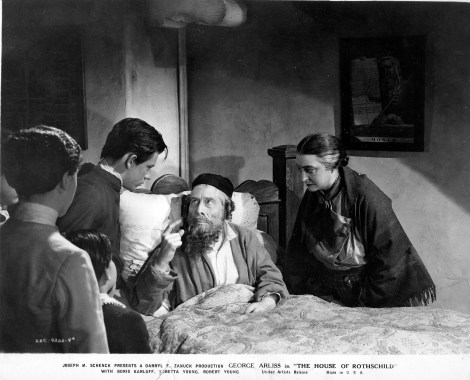
Jack Benny zeroed in on the family patriarch, Meyer Rothschild, for most of the humor. This is the first time that the following images have been published here on the Arliss Archives. Mr. A and Helen Westley in the film’s prologue where they raise their five sons in the Frankfurt ghetto:

Benny spoofs the “death bed” scene where Meyer instructs his sons to settle in various capitals of the world to establish their financial network:
Boris Karloff is mentioned by Benny but his character is not represented in the spoof:
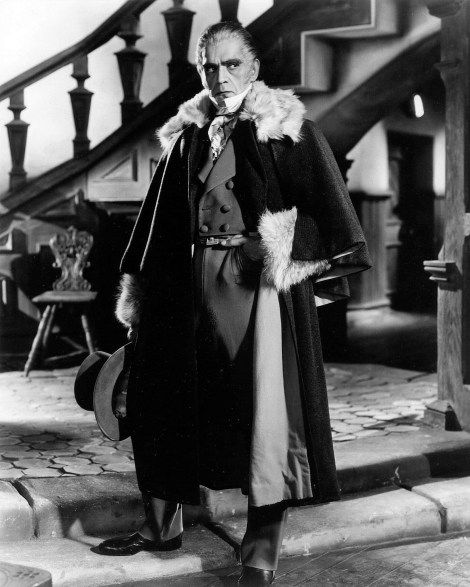
Note the hat that Karloff is holding – about five years ago that hat was offered through an online auction with bidding starting at $50. The winning bid was $450 and, alas, it was not by the Arliss Archives.

THE HOUSE OF ROTHSCHILD was the new studio’s flagship production to show that after one year’s existence the company was firmly established and growing – an impressive accomplishment considering that other major studios such as Paramount had gone into bankruptcy due to the Depression’s effect on movie attendance. That’s Darryl Zanuck on the left:

A closeup of the signatures that span all the Hollywood studios of that time. Can you spot autographs by Charlie Chaplin, Mary Pickford, Douglas Fairbanks, Clark Gable, Delores Del Rio, Cary Grant, Ann Harding, Ronald Colman, Loretta Young – hey, she was in the film!

Mr. A’s Final Performance – World War II Radio Address

As far as we can determine, Mr. A’s final professional appearance was in a brief radio address urging his fellow citizens in Britain to volunteer to assist the war effort near the beginning of World War II. The address was presumably broadcast over the BBC, and judging from some references by Mr. A, it was made at some point between September 1939 when hostilities between Britain and Germany were declared, and prior to May 1940 when the bombing began. This period of the Second World War has been dubbed “the twilight war” or “the phony war” because although war had been declared, there were no clashes between the two countries. This calm before the storm ended with the Battle of Britain in May 1940.

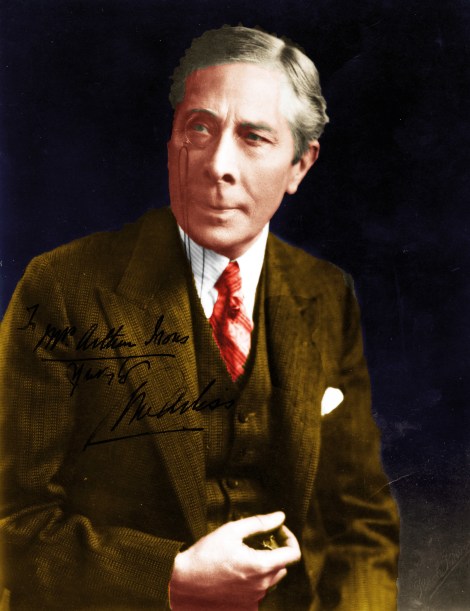
An autographed photo of Mr. A taken at about the same time as his war address, circa 1940:

Please click on the arrow below to hear George Arliss’s appeal for the war effort:

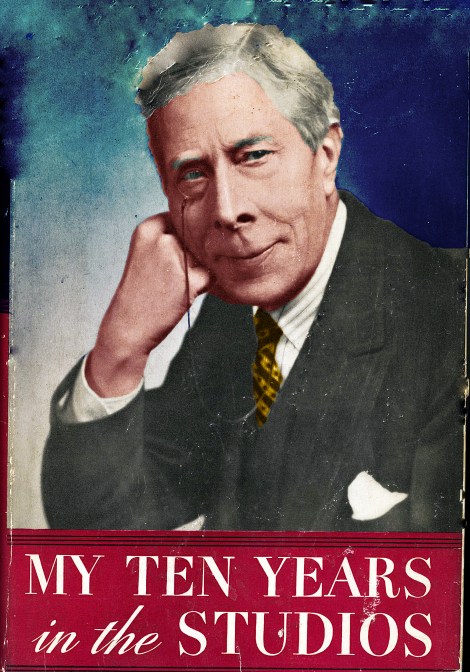
Despite the war, in May 1940 Mr. A’s second volume of autobiography was published on both sides of the Atlantic. Here is the original dust jacket with color enhancement. Notice that it was not necessary to identify the author on the cover. In the UK, this delightful volume was called GEORGE ARLISS BY HIMSELF:

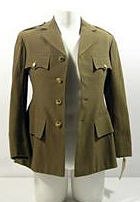
Since we’re in a military frame of mind, at right below is Mr. A in military uniform for THE KING’S VACATION (1933), and at left is a recent photo of the same tunic on auction. The fate of movie costumes is one of the more neglected areas of film study:

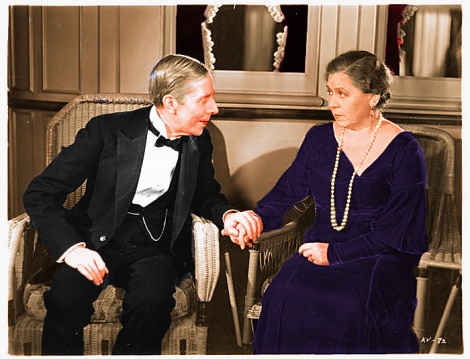
Here are more new images that have never been posted before on the Arliss Archives. First, an original color lobby card from THE LAST GENTLEMAN (1934). Left to right are Janet Beecher, Edna May Oliver, Mr. A, and Ralph Morgan:

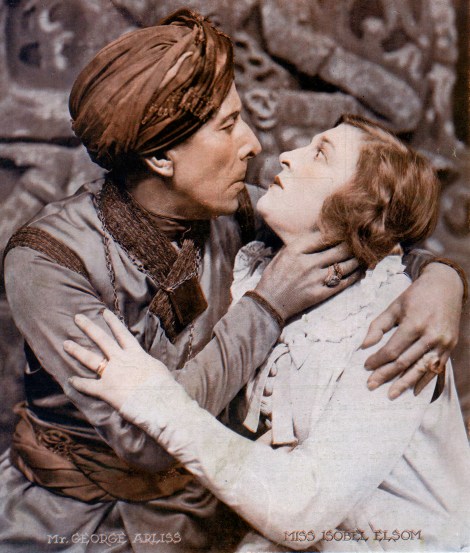
The following two images are original color photos (we don’t know the process used) that document Mr. A’s one-year run in London starring in THE GREEN GODDESS from September 1923 to September 1924. In this photo the lady in distress is Isobel Elsom:

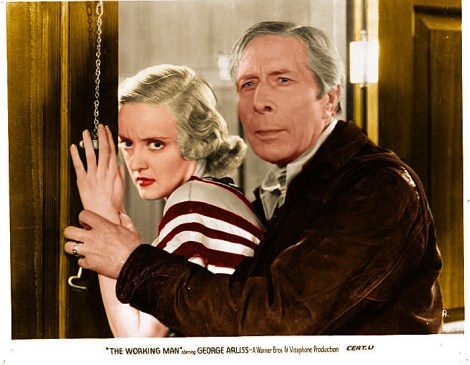
The cover of a British movie magazine that novelized current films and was illustrated with photos, here from THE WORKING MAN (1933). Apparently, these novelizations were based on the shooting scripts instead of the films themselves, and sharp eyed readers can spot scenes in the novel that were cut from the finished film:

Mr. A spent the winter months in California making films throughout much of the 1930s. He returned to his native Britain in the Spring of each year. This photo, circa 1929, shows his renting a western style home. Note Mr. A’s autograph near the bottom:

Cardinal Richelieu – Radio Broadcast and Original Lobby Cards

On January 23, 1939, George Arliss stepped before a live audience and a live microphone to broadcast a radio adaptation of his 1935 hit film, CARDINAL RICHELIEU. This prestigious event was one of the highlights of that season’s Lux Radio Theatre, hosted by none other than Cecil B. DeMille. Co-starring with Mr. A were some of the film’s stars including Caesar Romero and Douglas Dumbrille. The ingenue role of Lenore was played by Heather Angel, who replaced Maureen O’Sullivan from the film version. The key role of King Louis XIII was played by Montagu Love who last appeared with Mr. A in the 1931 film, ALEXANDER HAMILTON, where Love played Thomas Jefferson.

Best of all, members of the Arliss stock company were reunited: Ivan Simpson played Richelieu’s confident, Father Joseph (and stepped on some of Mr. A’s lines), Charles Evans played an innkeeper, Doris Lloyd played Queen Anne, wife of Louis, and best of all Florence Arliss played the Queen Mother Marie, who is an adversary of the Cardinal. It is interesting to hear Mr. and Mrs. A exchange harsh words in character rather than the romantic dialogue usually heard in their films. This broadcast was heard coast to coast and by shortwave around the world. As Mr. A says in his curtain speech at the end, a conservatively estimated 30 million people listened in. Today, a show with 5 million viewers is considered one for the record books.

If you weren’t around in 1939, that’s no problem here at the Arliss Archives. Just click (perhaps several times) on the play button below and you will be transported back in time to hear the complete hour-long broadcast:

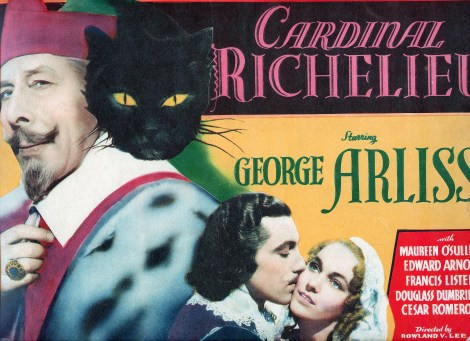
While you are listening, Mr. A suggested you might want to review the original set of eight lobby cards that were issued in conjunction with the film. The 11×14 inch size of each card is too large for most scanners today so we have done our best to squeeze most of the contents into the image space. This is the first card, known as the title card for obvious reasons:

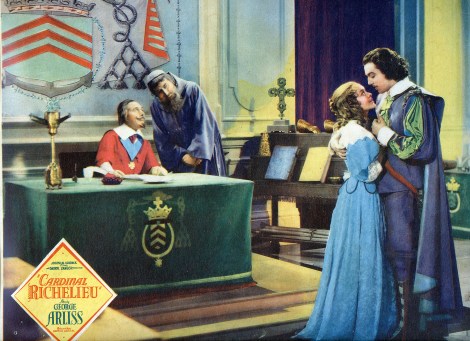
King Louis (Edward Arnold) and his retinue visit Richelieu where he meets the Cardinal’s ward Lenore (Maureen O’Sullivan) and is smitten by her. The villainous Baradas (Douglass Dumbrille on the right) smugly guesses the King’s plans for poor Lenore:

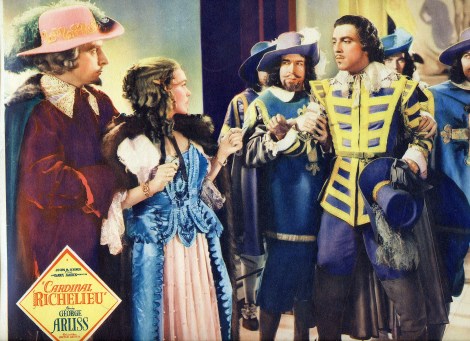
As Lenore is romanced by Andre dePons (Cesar Romero), the Cardinal realizes a way to thwart the King’s lustful intentions and instructs Father Joseph to bring the couple to the chapel so he can marry them:

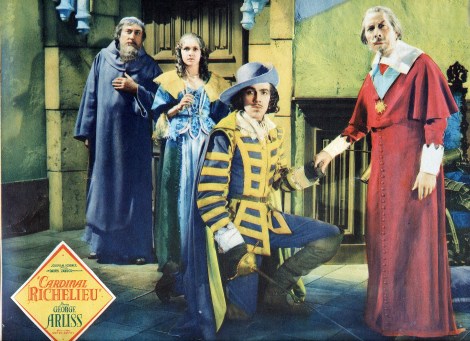
The King is furious with Richelieu and Baradas sees his opportunity to dethrone Louis and place his weak brother Gaston as a puppet king. But first Andre must be persuaded to turn against Richelieu and join Baradas:

Andre is initially duped and almost murders the Cardinal but Richelieu has a way of explaining things and Andre reveals Baradas’ plot to overthrow Louis in league with Spain:

Richelieu must overtake Queens Marie and Anne on their way to the Spanish border to deliver the conspirators’ secret treaty. That’s Reginald Sheffield on the right, a member of the Arliss stock company. He would become better known as the father of Johnny Sheffield, who played “Boy” in Johnny Weissmuller’s TARZAN films:

The Cardinal manages to catch up to the Queens (Katherine Alexander and Violet Kemble-Cooper) and tricks them into disclosing the treaty by using a simple ruse – he lies!
Since everyone at court believes Richelieu to be murdered by Andre, the Cardinal causes quite a stir when he shows up with the secret treaty. Baradas and his colleagues are arrested for treason, Richelieu is restored to the King’s favor, and the Cardinal suggests to his Majesty that the best way to celebrate is to give thanks to God:

The End

A nice portrait of Mr. A in the title role, originally in b/w that we transferred into color:

Happy Birthday, Mr. A!

April 10, 1868 fell on Good Friday –
an appropriate date for the birthday of the Man Who Played God.

“If I could imagine a nice birthday party, I would invite…..

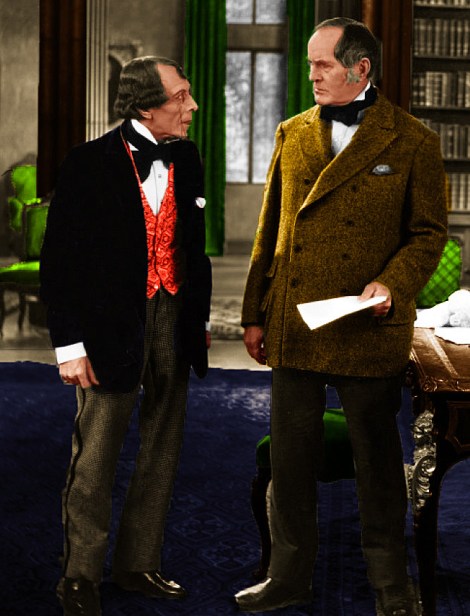
“Thank you, gentlemen, for attending my 144th Birthday party. I’m glad to find that we still fit into our Disraeli wardrobe.”

David Torrence, Mr. A, and Ivan Simpson in DISRAELI (1929)

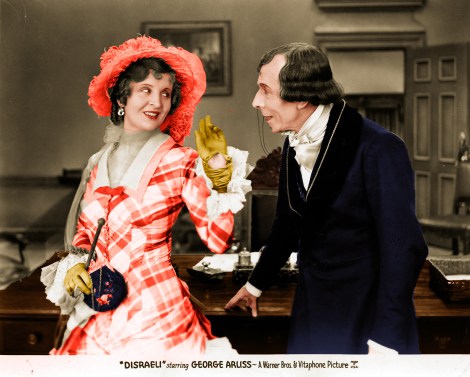
“Mr. Disraeli, I promise not to wear this hat if you promise to invite me to your birthday party.”

Doris Lloyd and Mr. A in DISRAELI

“Bungler! This birthday party invitation is addressed to Disraeli and I’m Voltaire.”

Alan Mowbray and Mr. A in VOLTAIRE (1933)

“Bungler! That birthday party invitation is addressed to Voltaire.”

“Rothschild, I told you that I’m not signing Mr. A’s birthday card!”

Mr. A and Boris Karloff in THE HOUSE OF ROTHSCHILD (1934)

“After ten years of lessons you don’t know how to play, ‘Happy Birthday’?”

Mr. A and Bette Davis in THE MAN WHO PLAYED GOD (1932)

“When we arrive at the party, I’ll introduce you as my niece, do you understand? My niece!”

Mr. A and Lesley Wareing in THE IRON DUKE (1934)

“Sir, this is, uh, my niece, yes that’s it, my niece.”

Mr. A, Margaret Lockwood and John Loder in DOCTOR SYN (1937)

“I wonder if Rothschild could get me into this party?”

Mr. A as Shylock in THE MERCHANT OF VENICE (1928-on the stage)

Published in: on April 10, 2012 at 2:34 PM  Leave a Comment  

Arliss Archives Surpasses 10,000 Hits!!

“Congratulations, George. Ten Thousand hits on your blog in barely a year! And here I thought you’d been forgotten! I should have known they can’t keep you off the Internet.”

Published in: on February 21, 2012 at 5:37 PM  Leave a Comment  

The Last Gentleman

Comedies about dysfunctional families are common now but George Arliss made this darkly-humored film concerning the impending death of the family patriarch in 1934. In many respects, THE LAST GENTLEMAN is quite modern in its unsentimental approach to quarreling family members, deceitful sons, and having the last laugh from beyond the grave.

Mr. A plays Cabot Barr, a flinty New Englander who bears a sufficient likeness to John D. Rockefeller, Sr. that the film opens with a special legal disclaimer stating that Cabot Barr’s resemblance to any persons living or dead is purely coincidental:

Barr lives with his friend Henry Loring (Ralph Morgan, brother of Frank “Wizard of Oz” Morgan) in a Boston mansion while estranged from his entire family:

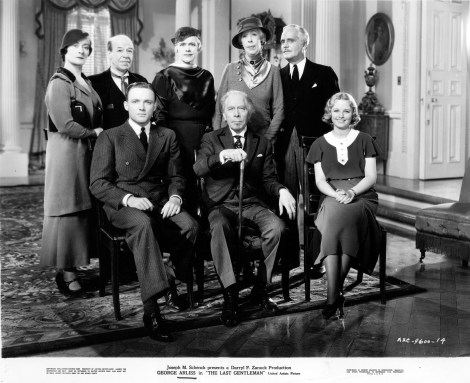
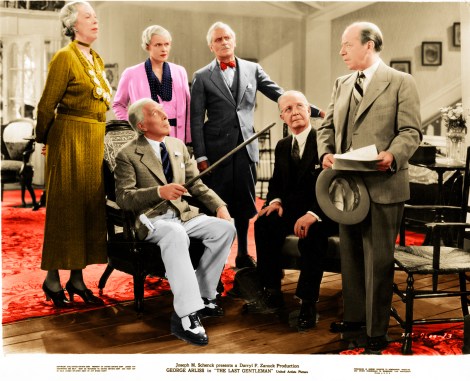
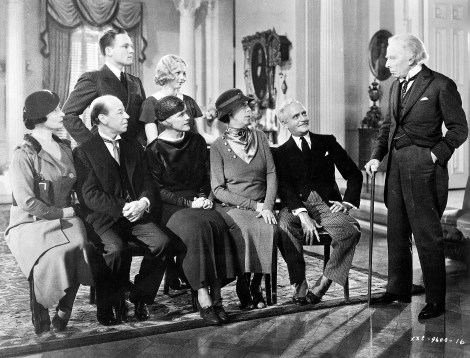
A charming family portrait, standing left to right: scheming son Judd Barr and his wife Netta (Raphaela Ottiano and Donald Meek), estranged daughter-in-law Helen (Janet Beecher), estranged sister Augusta (Edna May Oliver), companion Henry Loring; seated: disinherited adopted grandson Allan (Frank Albertson), Cabot Barr, and unacknowledged granddaughter Marjorie (Charlotte Henry):

Cabot decides to summon his relatives for a memorial service for another sister, a missionary in China who may or may not be dead. He really wants to see them again before finalizing his will:

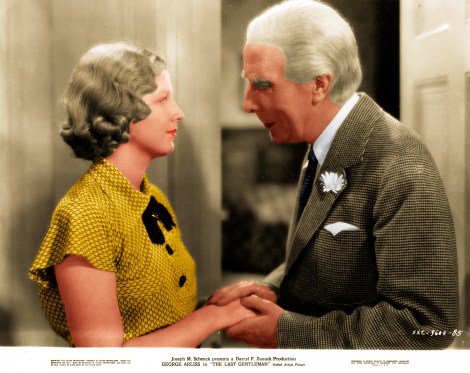
He speaks to his daughter-in-law Helen for the first time in sixteen years after he expelled her from his home because she had a daughter instead of a son and heir. Cabot refuses to speak to his granddaughter Marjorie until she sabotages the memorial service by setting off all the alarm clocks in the house:

Cabot rules his household with an iron fist and no one is spared his wrath especially his butler Claude (Edward Ellis), an ex-convict:

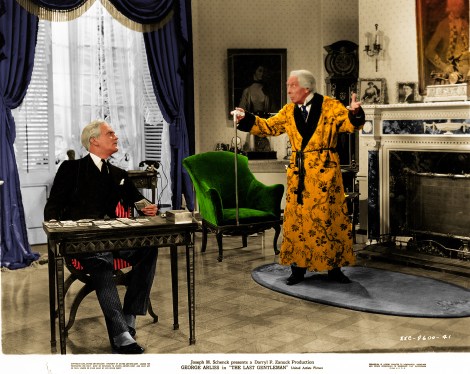
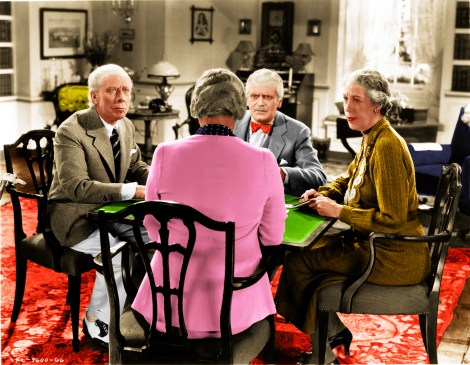
Granddaughter Marjorie has all the contrariness of a true Barr so Cabot takes a liking to her in hopes she will marry Allan, his sister Augusta’s adopted son, in order to continue the family name. While encouraging the romance, Cabot runs roughshod over a rubber of bridge:

Film reviewers were startled by the strong resemblance between the fabulous Edna May Oliver, seated on the right, and Mr. A:

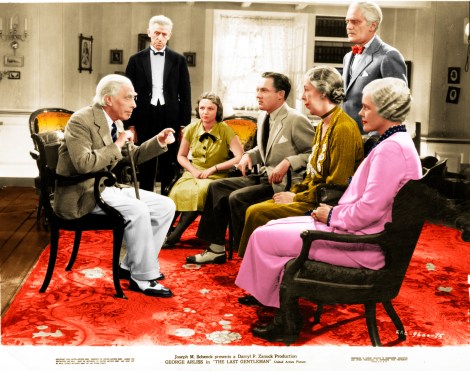
Cabot’s spendthrift son Judd (standing), tries to have his father declared incompetent by a psychiatrist (seated to Mr. A’s right) so he can gain control of Cabot’s money:

Fending off Judd’s challenge depletes Cabot as he realizes that his son is not only a wastrel but a scoundrel. He conceives an idea to have the last word after his death. Frank Albertson plays Augusta’s adopted son Allan, whom Cabot hopes to marry off to Marjorie to continue the name:

Suddenly “feeling very old,” Cabot says goodbye to Marjorie and retires to his bedroom where he later dies:

Following the funeral, the family gathers at the Barr home to hear the reading of the will. They are startled to discover that Cabot himself reads his will and settles old scores in the process. How he does this was once so secret that theater managers would not permit seating during the last ten minutes of THE LAST GENTLEMAN, and even the New York Times movie critic declared that “neither wild horses nor the rack” would drag the story’s solution from his lips. But it’s great fun and provides a memorable finale!

Production Shots

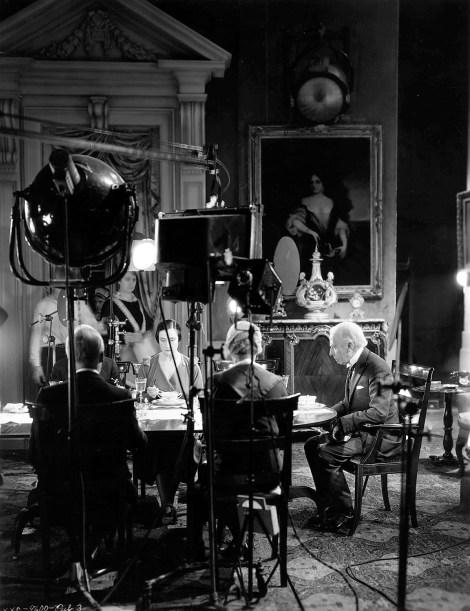
The Barr family is momentarily quiet as its patriarch says the Grace Before Meals. The scene appears serene…

…until we take a look from the side to see the confusion of wires and lights needed to film the scene:

This production photo is scanned directly from an 8×10 inch negative. The expressions on everyone’s faces says it all:

Arliss Alert! THE KING’S VACATION (1933) on TCM, Monday, Nov. 14 @10:30am ET

If you can’t be there, set your dvr, tivo or vcr for Turner Classic Movies to catch this poignant, humorous film showing why we can’t go home again. THE KING’S VACATION co-stars include Dick Powell, Patricia Ellis, Dudley Digges, and Florence Arliss.


To view more photos and read more info, visit our post on THE KING’S VACATION listed in the column on the right.

Published in: on October 5, 2011 at 5:40 PM  Leave a Comment  

Breaking 5,000 Visits!

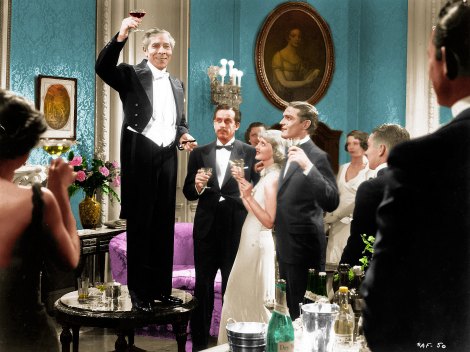
“Ladies and gentlemen, please join me in a toast to celebrate our surpassing 5,000 visits, or ‘hits’ as the young people prefer to call it, to the Arliss Archives.”

Published in: on August 14, 2011 at 7:04 PM  Comments (1)  
Tags: , , , , , , , ,

Arliss Alert! THE WORKING MAN on TCM, Wednesday, Aug 3 @ 6am EDT

Get your dvr, tivo, or dvd recorder ready for this coming Wednesday morn, August 3, at 6 AM eastern daylight time for one of Mr. A’s most delightful (and clever) comedies – THE WORKING MAN (1933). Added bonus: Bette Davis co-stars:

Published in: on July 28, 2011 at 12:11 AM  Leave a Comment  
Tags: , , ,

The Arliss Stock Company – Part One

One of the wonders of the old studio system was its roster of veteran actors and actresses who were under long-term contract and appeared together in numerous films over several years. While George Arliss had no formal stock company, by his own admission he would have cast the same players in every film he made if there were nobody to “control” him, as he put it. Just the same, several actors turned up frequently in the Arliss films but almost always playing vastly different characters than in previous films and having significantly different relationships with Mr. A’s character. This post will focus on the contrasting characters played by some supporting cast members.

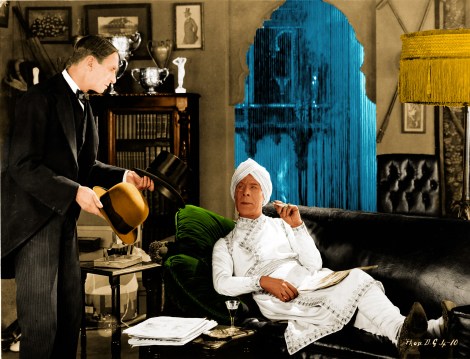
Ivan Simpson had performed on stage with Mr. A and in two silent films. With the arrival of sound films in the late 1920s, Simpson enjoyed a long and successful film career in character parts. He was immediately tapped by Mr. A when he reported to Warner Bros. in 1929 to film his stage hit, THE GREEN GODDESS (1930). Simpson repeated his stage role as Watkins, the surly cockney valet to Mr. A’s Rajah of Rukh. We learn that Watkins is a deserter from the British Army, among other faults, and the Rajah delights in ridiculing Watkins for his inherent British “superiority” over other people. Mr. S seems to hold the record at nine appearances in the Arliss films, silent and sound:
Photo from the 1923 silent film

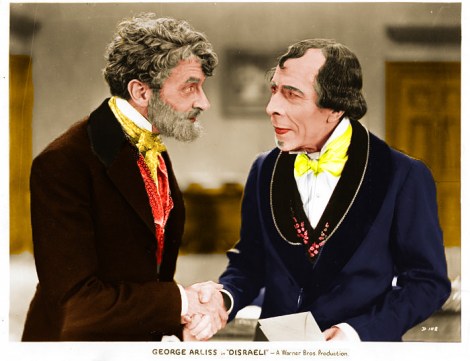
Simpson played financier Hugh Meyers, a character modeled after Lionel Rothschild, who privately financed British prime minister Benjamin Disraeli’s purchase of the Suez Canal in 1875:
Photo from the 1929 film

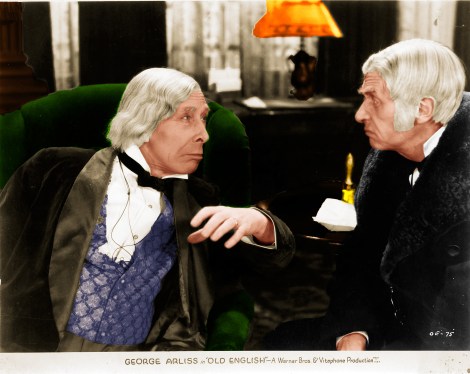
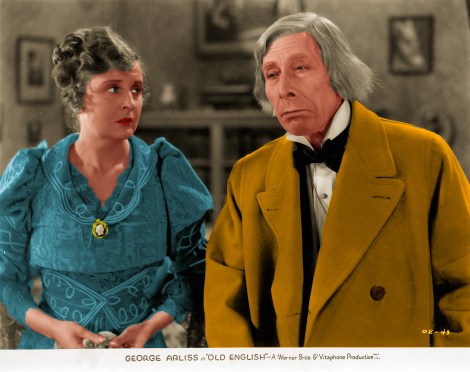
Ivan Simpson’s next appearance with Mr. A is as an octogenerian crony of Old Heythorp in OLD ENGLISH (1930):

Simpson’s final film appearance with Mr. A (they later performed together on radio) seemed to admit him to the pantheon class. In THE HOUSE OF ROTHSCHILD (1934) he and Mr. A are finally brothers, Nathan and Amschel:
Offscreen, Ivan Simpson was an accomplished sculptor. Here he spends his free time productively between filming scenes for DISRAELI during the summer of 1929:

Doris Kenyon became popular in films by 1917 and was a genuine star during the 1920s. After her marriage to fellow star Milton Sills, they appeared together in many films. In 1922, Mr. A and Kenyon played father and daughter in THE RULING PASSION, now a lost film but remade by Mr. A in sound as THE MILLIONAIRE (1931):

Nine years later, Mr. A and Kenyon are husband and wife in ALEXANDER HAMILTON (1931). Kenyon’s husband, Milton Sills, died suddenly in September 1930 (ending what appeared to be a successful transition from silent to sound films) and she intended to retire. But Mr. A persuaded her to return to work:

Then Kenyon plays courtesan Madame De Pompadour to Mr. A’s elderly philospher at the Court of Louis XV in VOLTAIRE (1933):

Dudley Digges worked on the production side of the theater and functioned as Mr. A’s stage manager in the 1910s. Digges directed the stage version of ALEXANDER HAMILTON in 1917 and played a role as well. Thus bitten by the acting bug, he became an actor but retained his considerable experience in staging. Here Digges plays the corrupt Senator Roberts, based on the real-life William B. Giles, to Mr. A’s ALEXANDER HAMILTON (1931):

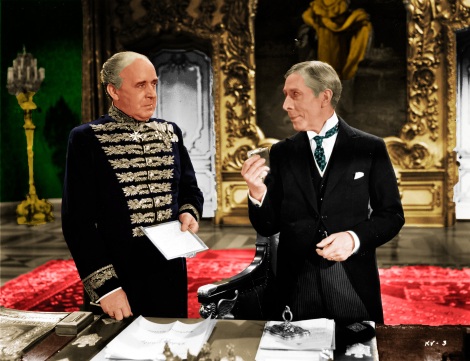
A dignified Dudley Digges is the Lord Chamberlain to Mr. A’s reluctant monarch in THE KING’S VACATION (1933). Digges is best remembered today for two film roles: the police inspector who tracks down THE INVISIBLE MAN (1933), and the drunken ship’s doctor in MUTINY ON THE BOUNTY (1935):

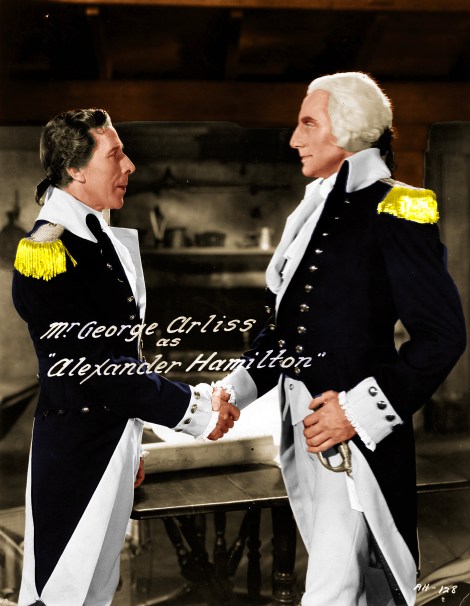
Alan Mowbray is remembered mainly as a portly and comical character actor in the 1940s and 50s, including a fair amount of television work. But in his earlier (and slimmer years) he appeared in three Arliss films. Here a heavily made-up Mowbray as George Washington towers over Mr. A:

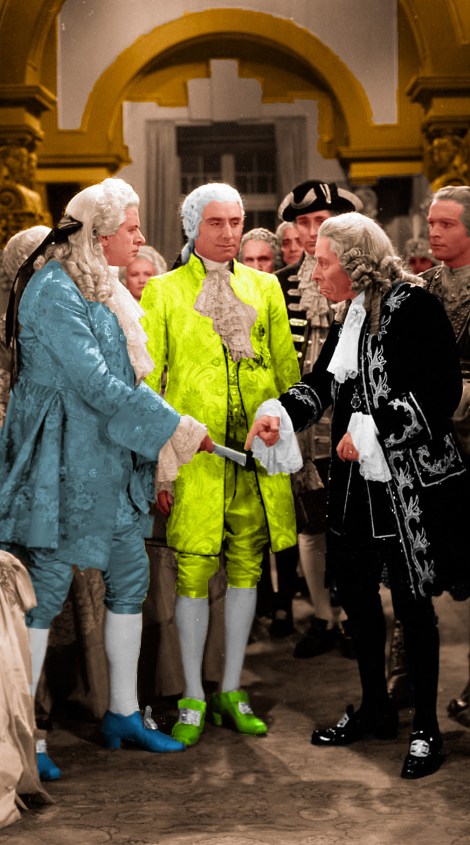
Mowbray is the villainous Count DeSarnac who devotes himself to seeing Voltaire sent to the Bastille. Here he seems to have the upper hand as King Louis XV (Reginald Owen) expresses his anger over Voltaire’s play:

Speaking of Reginald Owen, although he appeared in only two Arliss films, his majestic Louis XV of VOLTAIRE contrasted significantly with his somewhat obsequious role in THE HOUSE OF ROTHSCHILD. Playing Herries, the Chancellor of the Exchequer, Owen pleaded with Nathan Rothschild to loan more money to the Allies to battle Napoleon. Another member of the stock company here is Florence Arliss, who had a total of six appearances (she appeared in no other films except Mr. A’s). Unlike the other members of the stock company, Mrs. A unvarying role was to play Mr. A’s screen spouse in five films:

Doris Lloyd can been spotted playing maids or titled dowagers in numerous films from the 30s through THE SOUND OF MUSIC (1965). But earlier, Lloyd played substantial roles in the Arliss films. Here Lloyd is Mrs. Travers, the charming spy for Russia who ingratiates herself into Disraeli’s household:

Here Lloyd is the worrisome Mrs. Lorne, a struggling novelist who has two children “under the rose” (i.e., out of wedlock) by old Heythorp’s deceased son. Their respective characters between DISRAELI and OLD ENGLISH (1930) could not have been more different:

David Torrence was the first actor to play stuffy Lord Probert in the Montreal tryout for DISRAELI in 1910. Apparently, Torrence did not appear with the Arliss stock company until he resumed his role of Lord Probert in the 1929 sound film. Thereafter, he continued to play in Arliss films, adding a dignity to otherwise disagreeable characters:

How many members of the Arliss stock company can you find in this photo? While Mr. A gives advice to newcomer Margaret Lindsay, behind beards, veils and wigs are Ivan Simpson, Doris Lloyd, David Torrence, and Douglass Dumbrille (who will be discussed in Part 2):