The current interest in 3D movies has a long history dating back to the 19th century use of stereograms whereby two seemingly identical photos were placed side-by-side. When seen through a viewer, called a Stereoscope, these 2D images sprang to life by blending into one three-dimensional image that was more vivid than life itself. The secret to creating this 3D illusion was to take one of the two “identical” photos from a slightly different perspective than the other, about equal to the distance between our eyes.
The Age of Stereograms spanned the 1880s through the 1920s and offered mainly the sights of far-away places. Celebrity 3D photos were limited to political leaders and important military officers. For whatever reason, neither Broadway nor Hollywood celebrities seemed to have posed for these pictures. However, 21st century computer software can help us render a “simulated 3D” image that suggests what our favorites of yesteryear might have looked like in the third dimension. If you have access to an old Stereoscope or perhaps to a modern version made of cardboard found in books about old stereo cards, then you’re all set to enjoy seeing Mr. A as Shylock as he appeared on the stage in 1928 in Shakespeare’s THE MERCHANT OF VENICE:

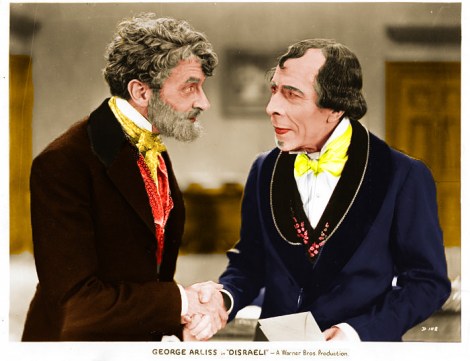
Don’t despair if you lack access to a viewer because you really don’t need one. With a bit of patience you can easily train your eyes in the knack of “free viewing,” where you can see the 3D effect without a viewer. If your Blogmeister can learn it, so can you. It helps at first if you hold your hand or a piece of cardboard in front of your face on edge so your right eye cannot see the picture on the left side and your left eye can’t see the picture on the right. Stare straight ahead as if you are are looking “through” the photos and soon you’ll notice the two photos move towards each other to become one. Try it with this image of Ivan Simpson and Mr. A from DISRAELI (1929):
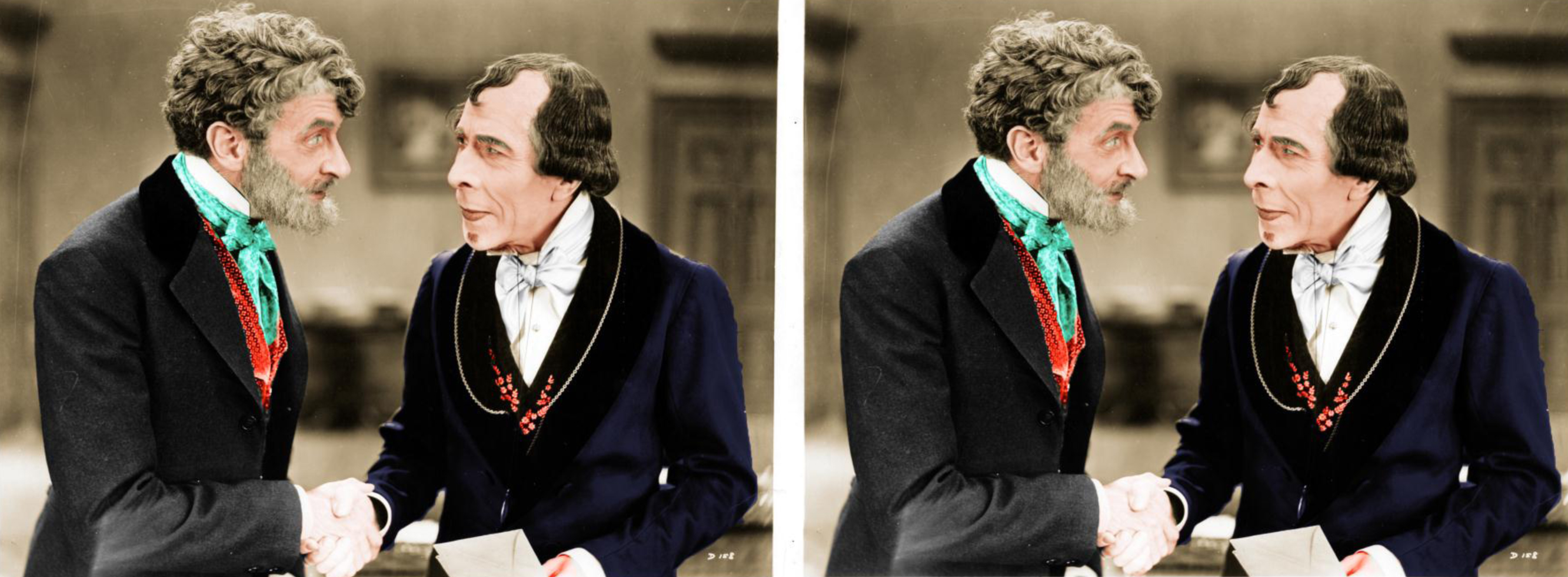
I find that smaller size photos work better than larger ones. Also, experiment with moving the images closer or further away from your eyes. A distance between 10 and 12 inches or so usually works but you’ll just have to use trial and error. Once you’ve experienced the 3D effect you will know what to look for and subsequent free viewing will be easy. Here is Ivan Simpson again without his makeup for DISRAELI, but practicing his skill as a sculptor by immortalizing Mr. A as Mr. Disraeli:
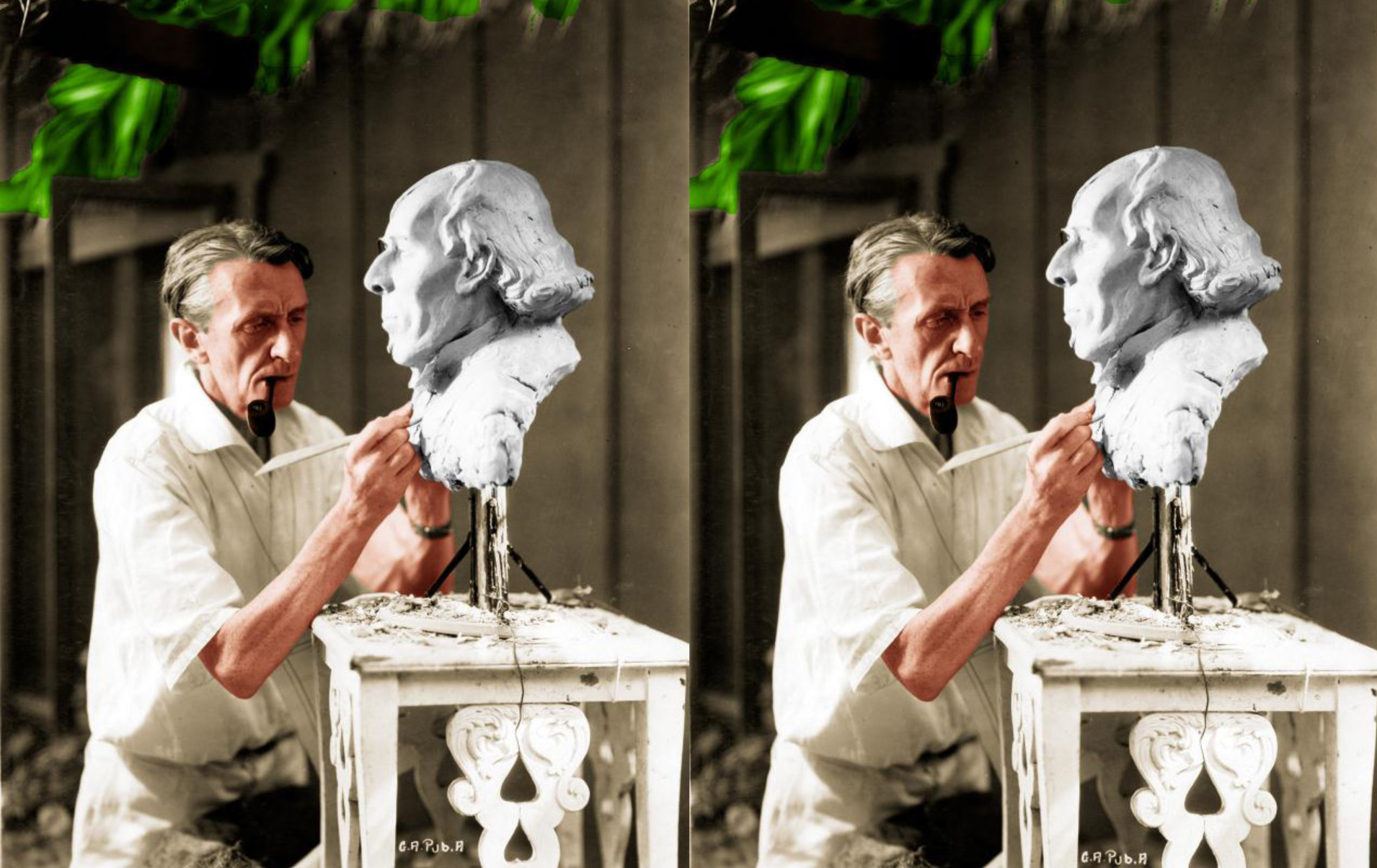
You can enjoy the 3D effect right on your computer screen so there’s no need to print out the images. I’ve even managed to see the 3D effect with these photos on my iphone but I won’t recommend it for beginners. Not every photo is a candidate for 3D. This photo of Mr. A and June Collyer from ALEXANDER HAMILTON (1931) works well because it has a clearly defined foreground and background:

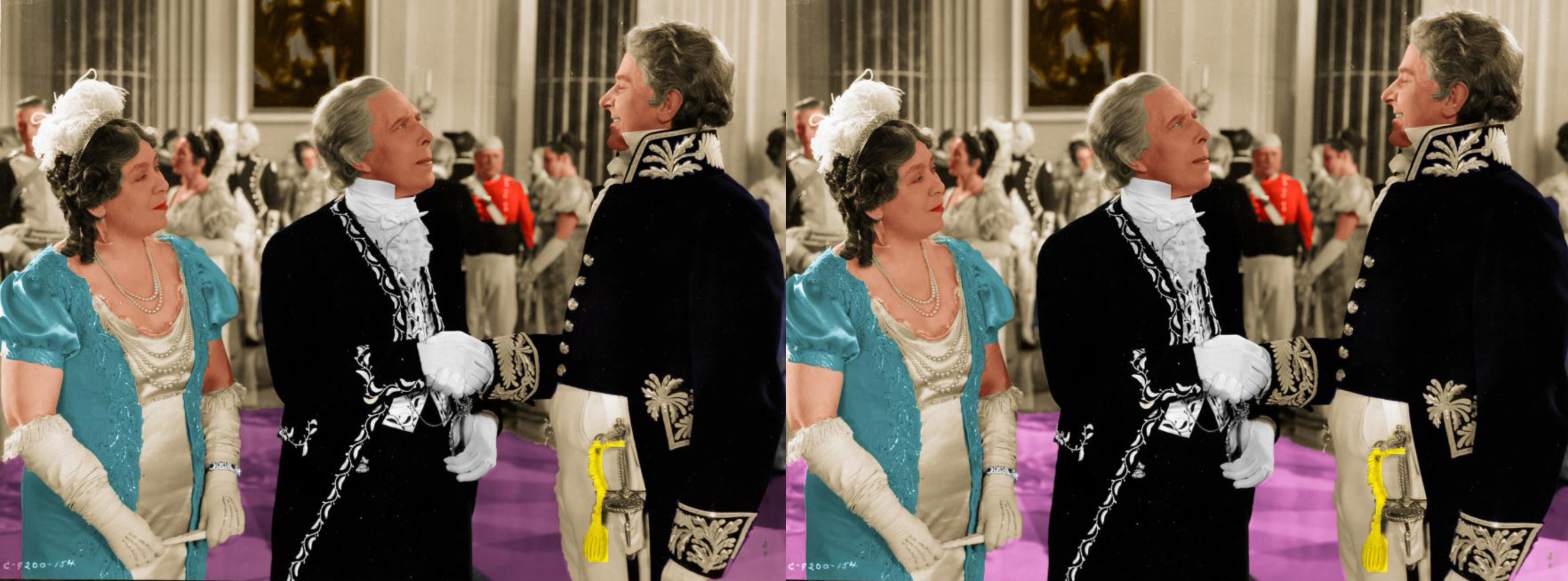
If you’ve gotten this far with seeing the above photos in 3D, then you’re ready for the post-graduate course. Try this exquisite portrait of Mr. A, Loretta Young, and Robert Young from THE HOUSE OF ROTHSCHILD (1934). Not only is the foreground/background clearly distinguished, but the lighting effects seem to suggest a 3D effect as well:

This photo is from the closing scene of THE HOUSE OF ROTHSCHILD that was originally photographed in color so I took my coloring cues directly from the film itself. I slightly altered the color of the carpet between the two images so you may notice a vivid quality as the colors combine. Florence Arliss, Mr. A, and Reginald Owen:
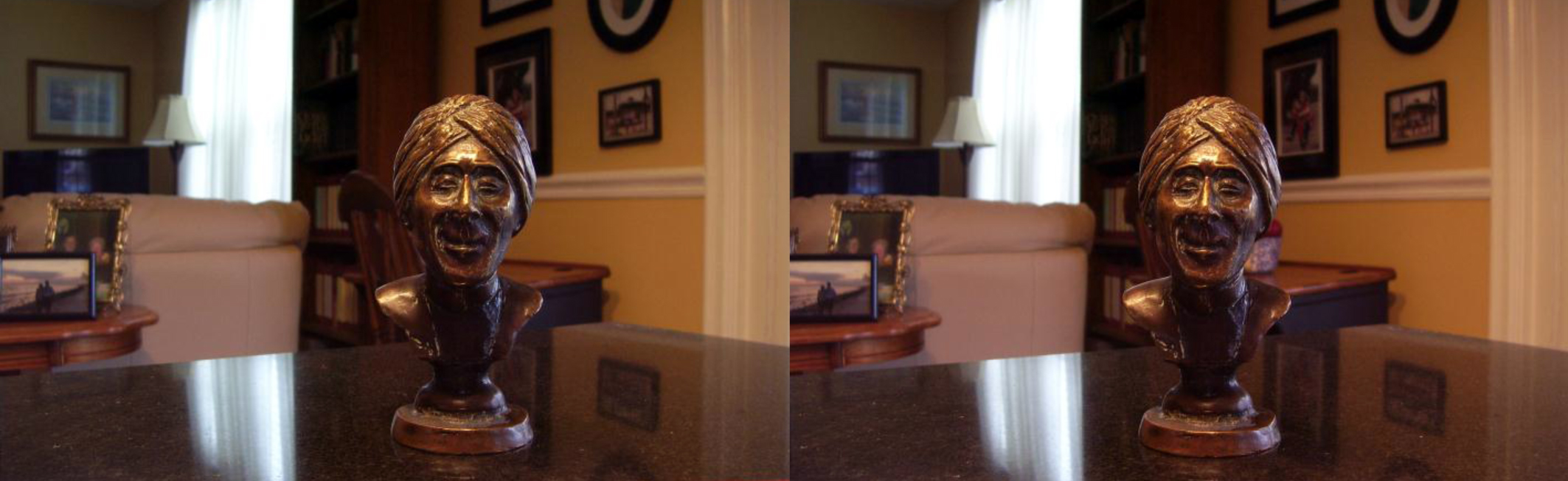
Finally, here is a genuine 3D photo that your Blogmeister just made using an ordinary digital camera. The bust was sculpted by Ivan Simpson around 1923 and captures Mr. A as the Rajah of Rukh in THE GREEN GODDESS, a hit play that he made both as a silent film and later in sound in 1929 (release in 1930). Mr. A refers to this bust in the first volume of his memoirs:





 ARLISS ARCHIVES
You must be logged in to post a comment.