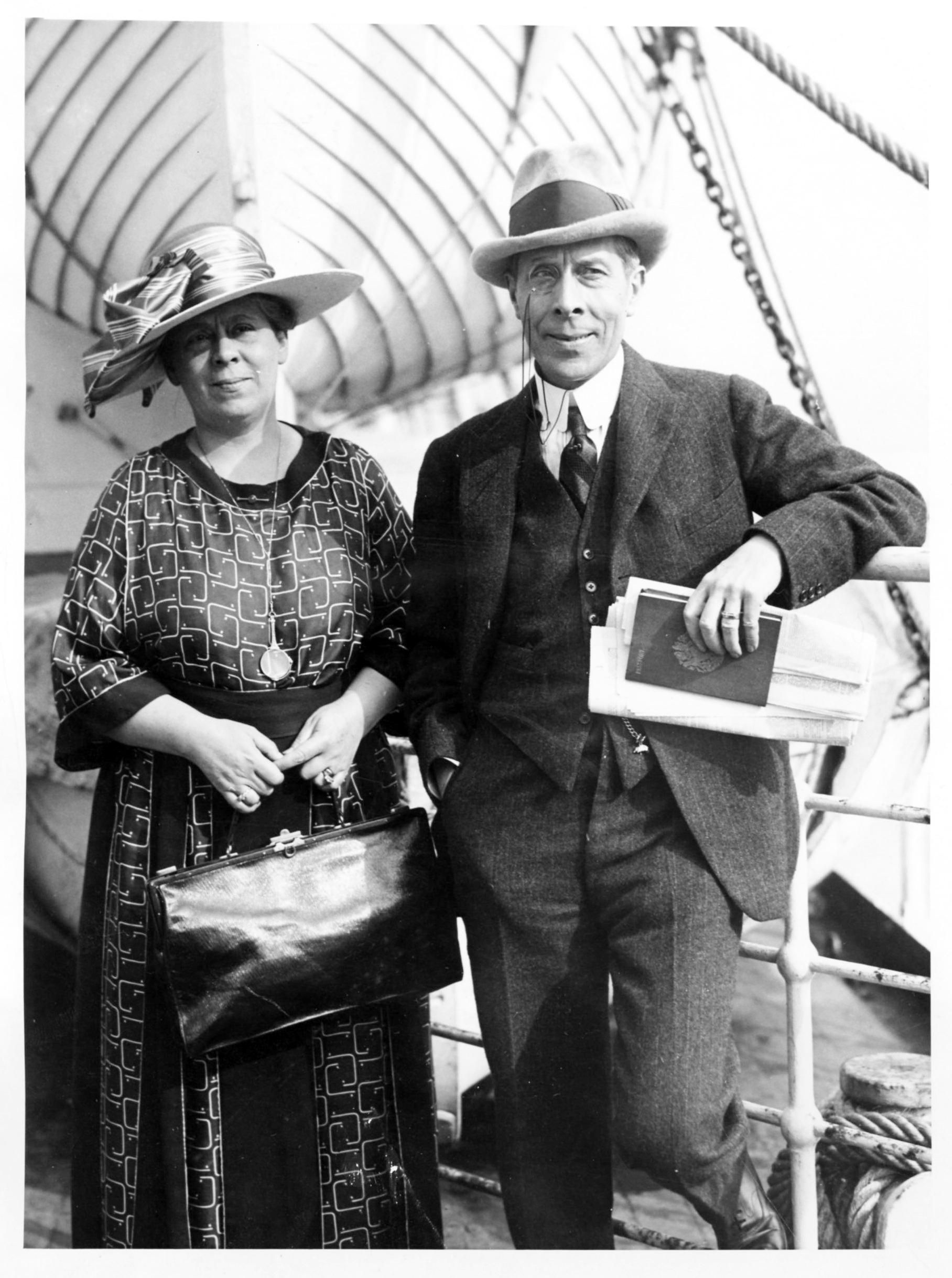
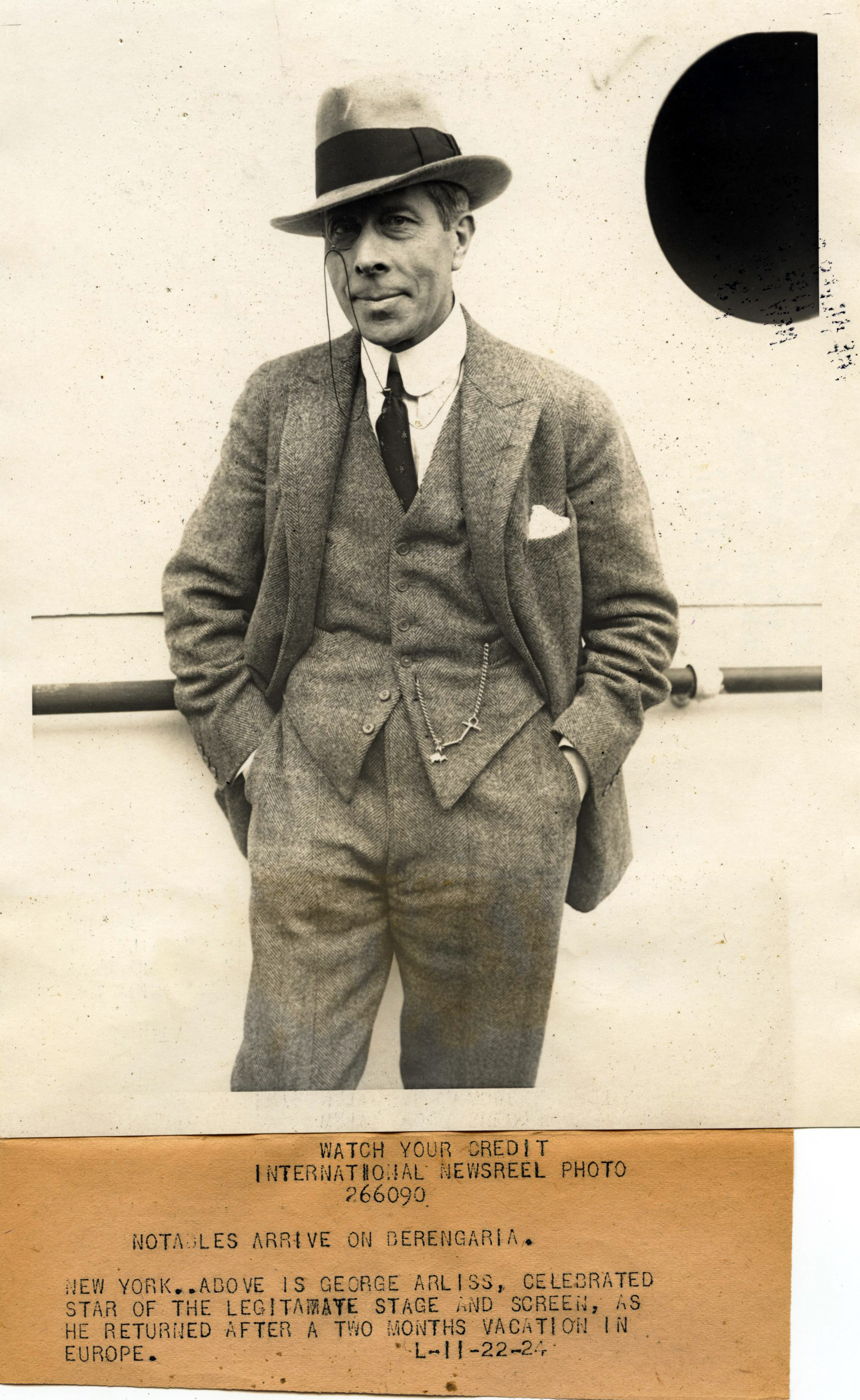
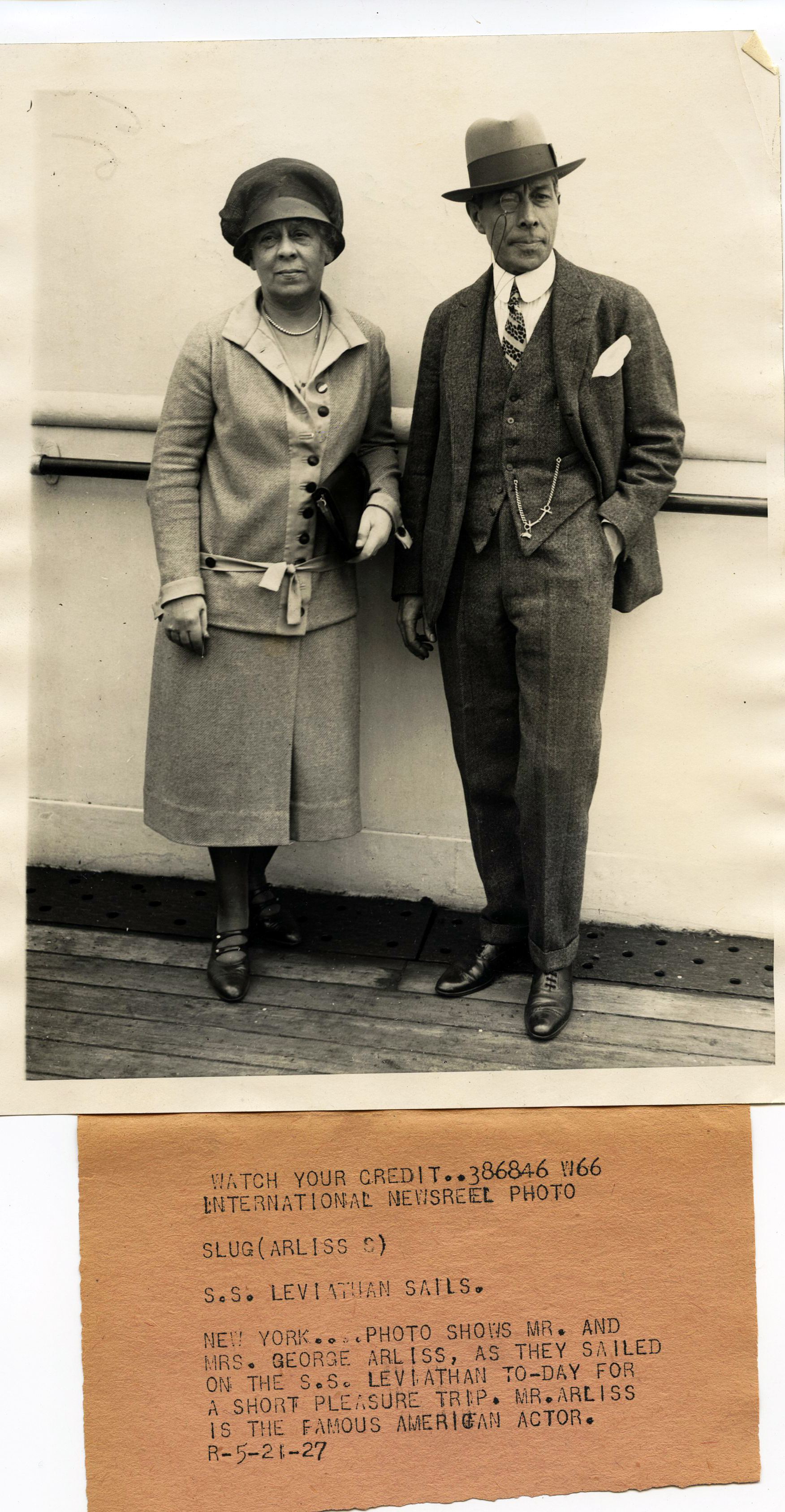
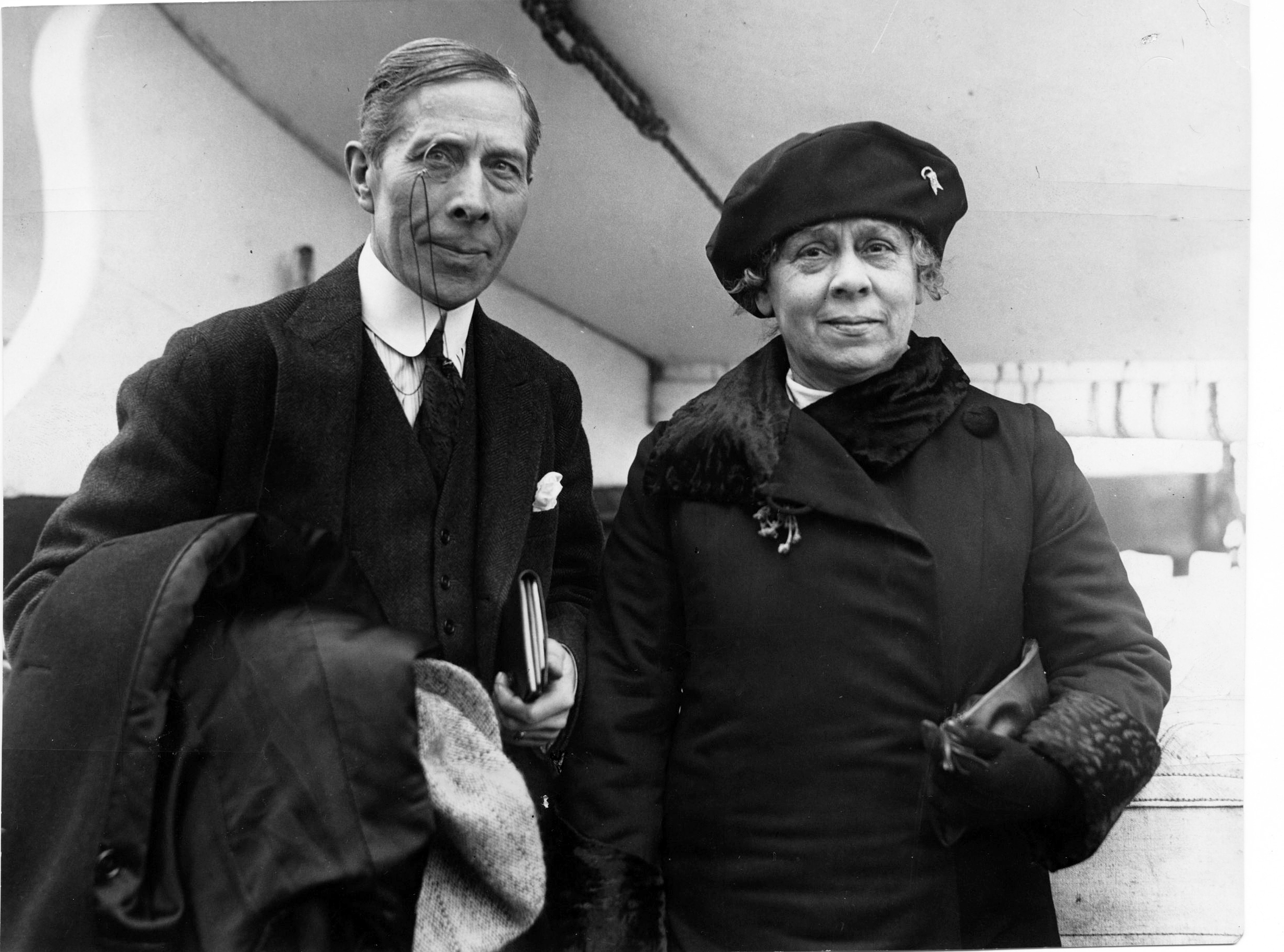
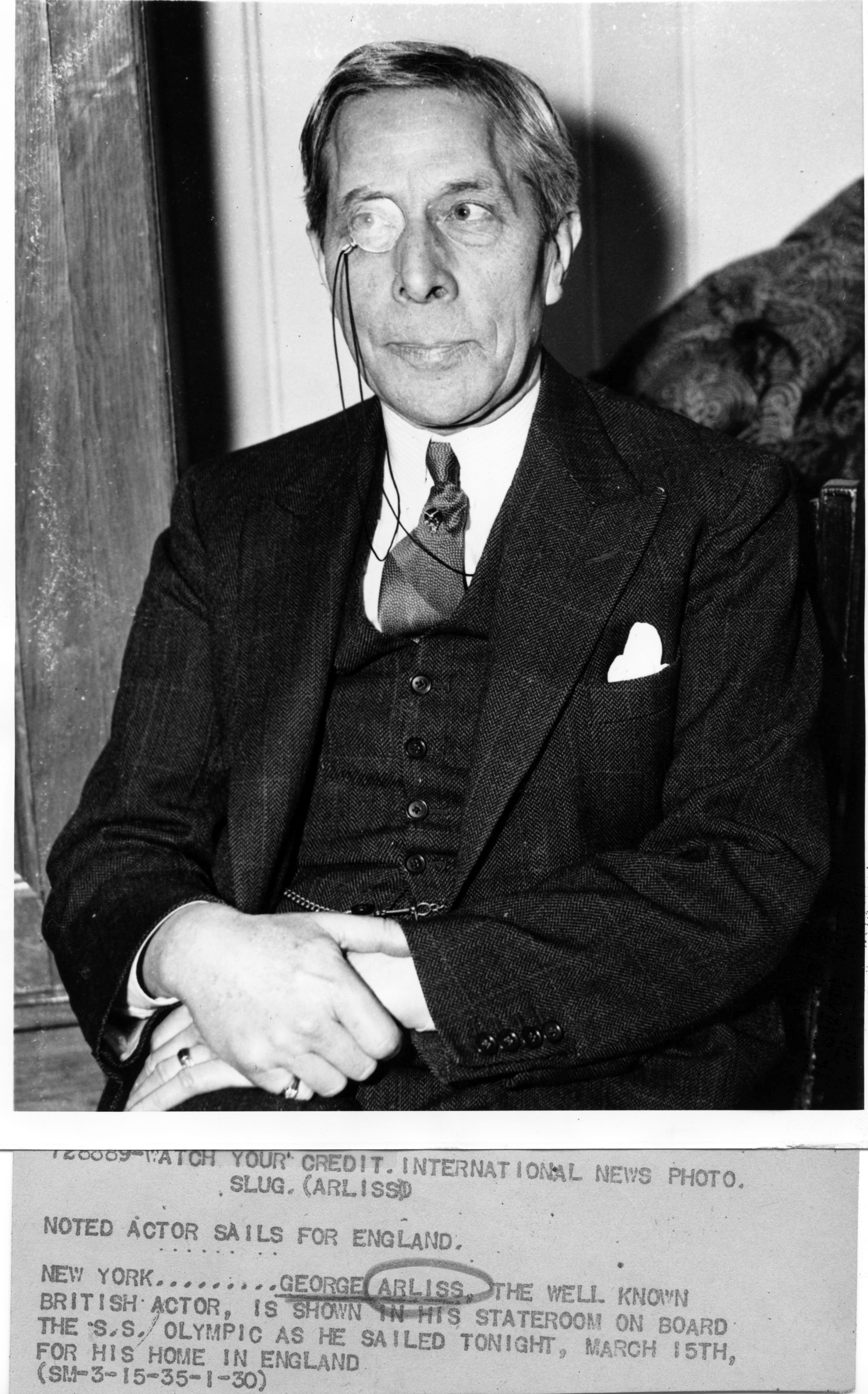
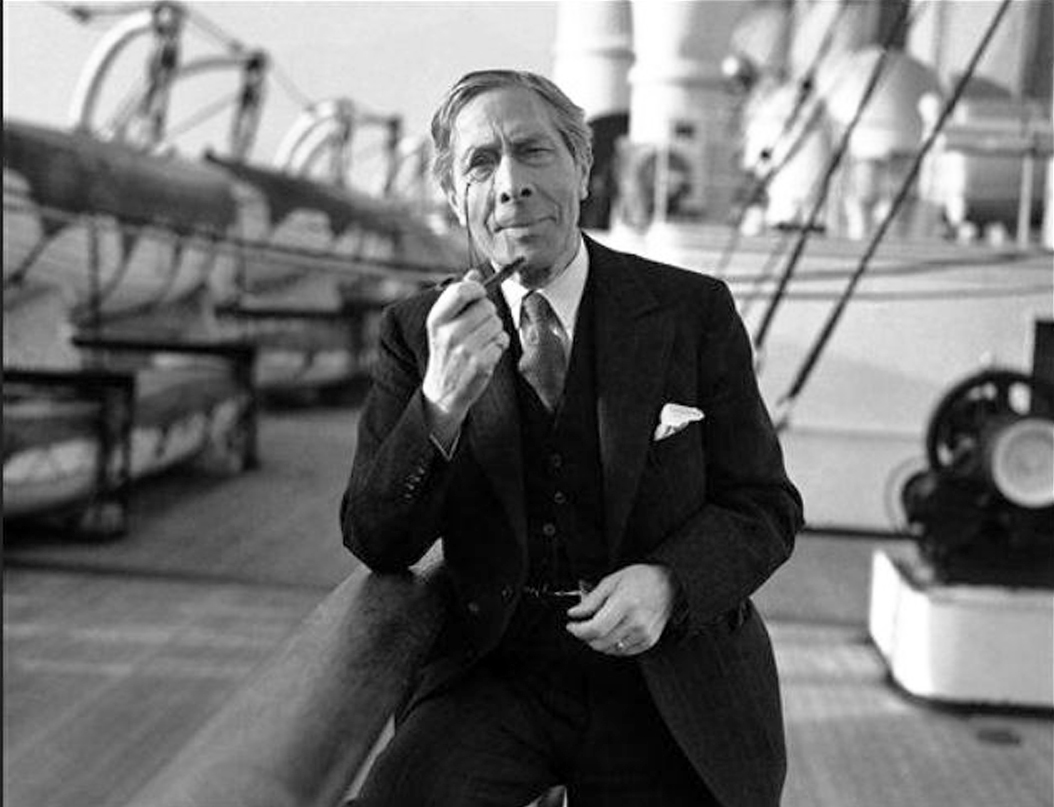
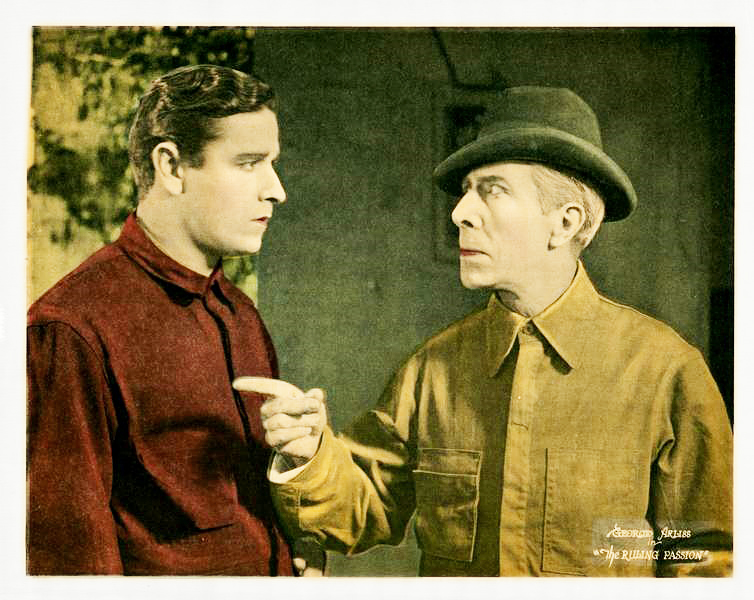
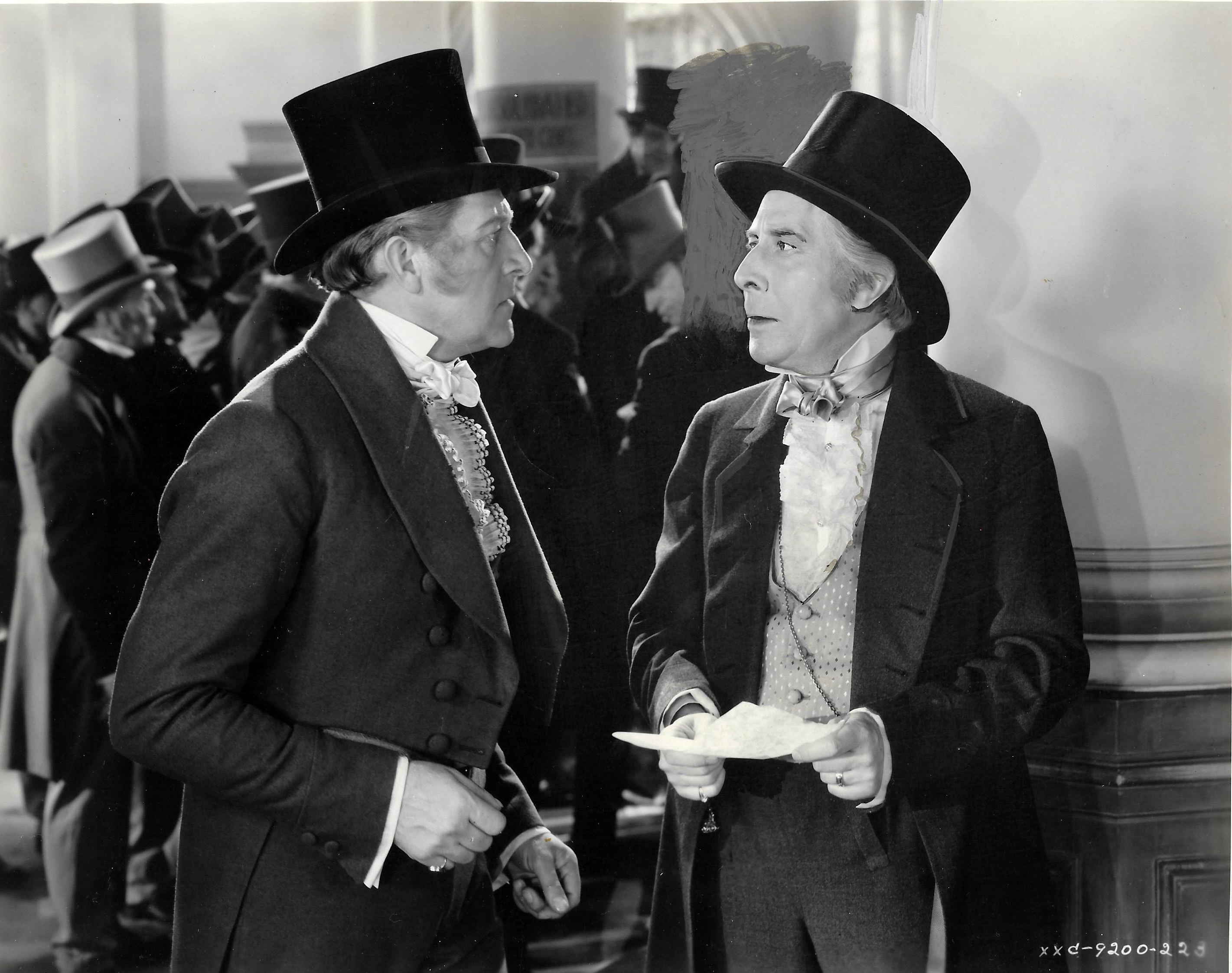
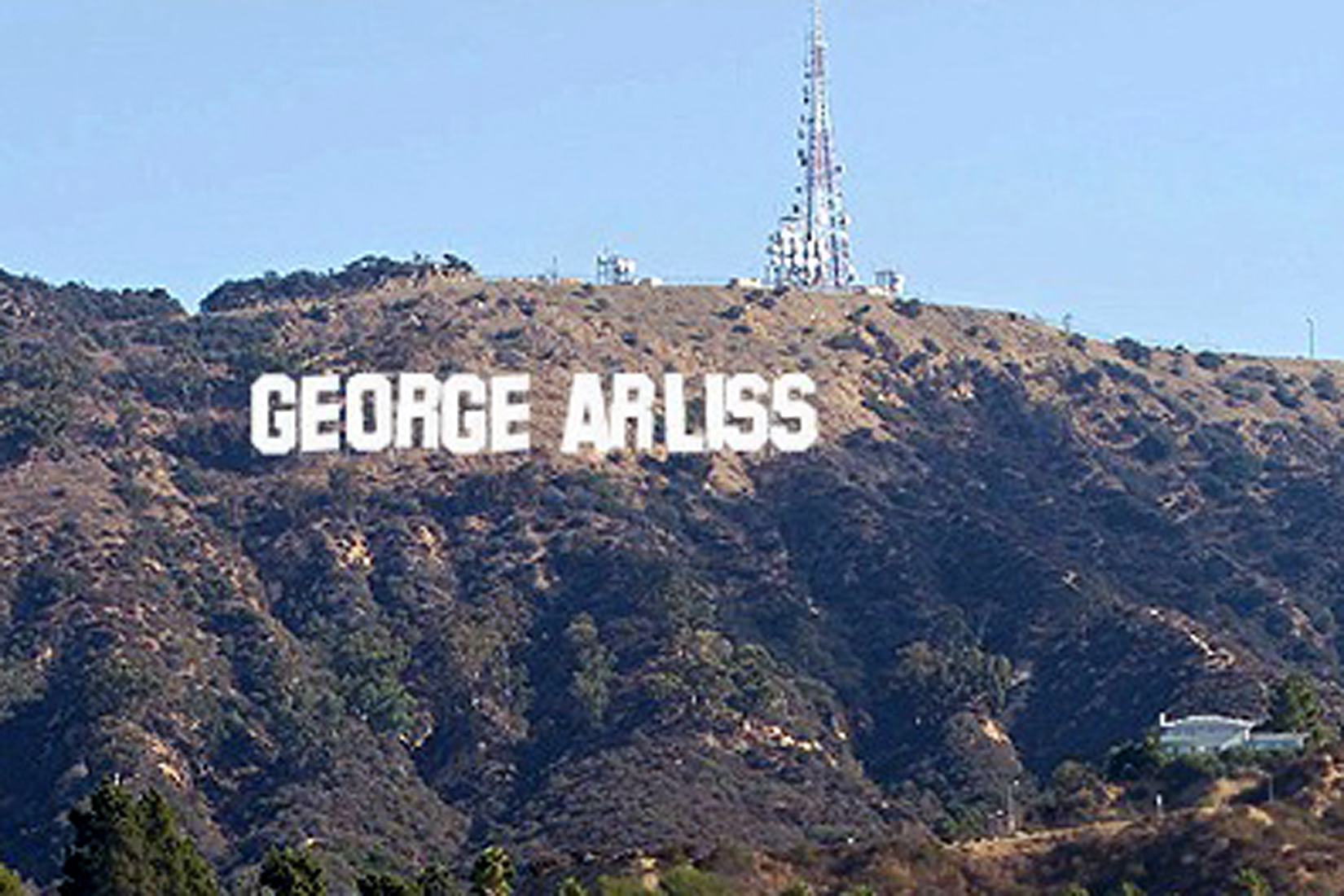
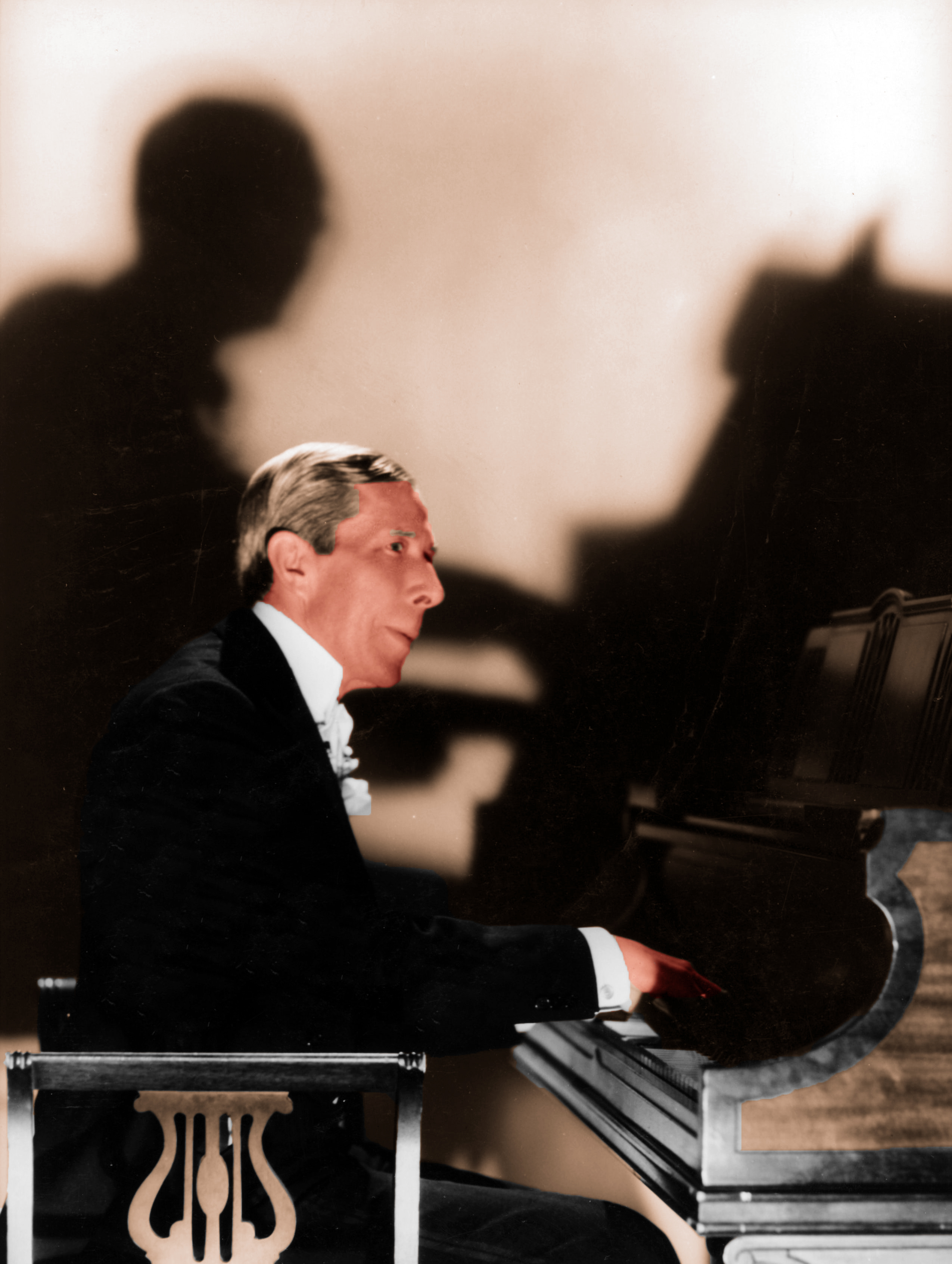
Here it is – our official 2020 George Arliss Calendar. This year we offer Mr. A with a distinctly “cowboy” look. The colorization is, as usual, by myself. Get your calendar today, and that’s easy. Just print it out. Looks great in 8×10!
A Brief “Morphing” Video with Mr. A as Disraeli from the 1921 Silent Film
Here’s a short “morphing” video I just created using a portrait of Mr. A as Benjamin Disraeli from the 1921 silent version of DISRAELI, a film that is now apparently lost. The musical accompaniment I added is especially complimentary (I think):
A Video Tour of the Original Souvenir Program from DISRAELI (1929) with original color lobby cards

Souvenir programs from vintage films are highly collectible and one in mint condition can be quite expensive to acquire. Let’s take a video tour of this 1929 DISRAELI program from my collection. I’ve interspersed the set of color lobby cards released by the studio to enhance the tour.
Here we have a complete copy of another Arliss-DISRAELI souvenir program. But this one is from the stage version and dates from 1912!


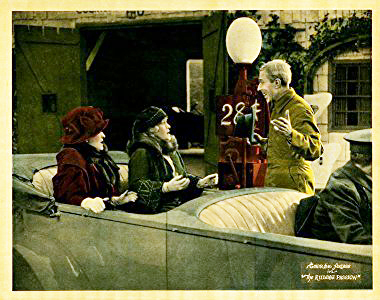
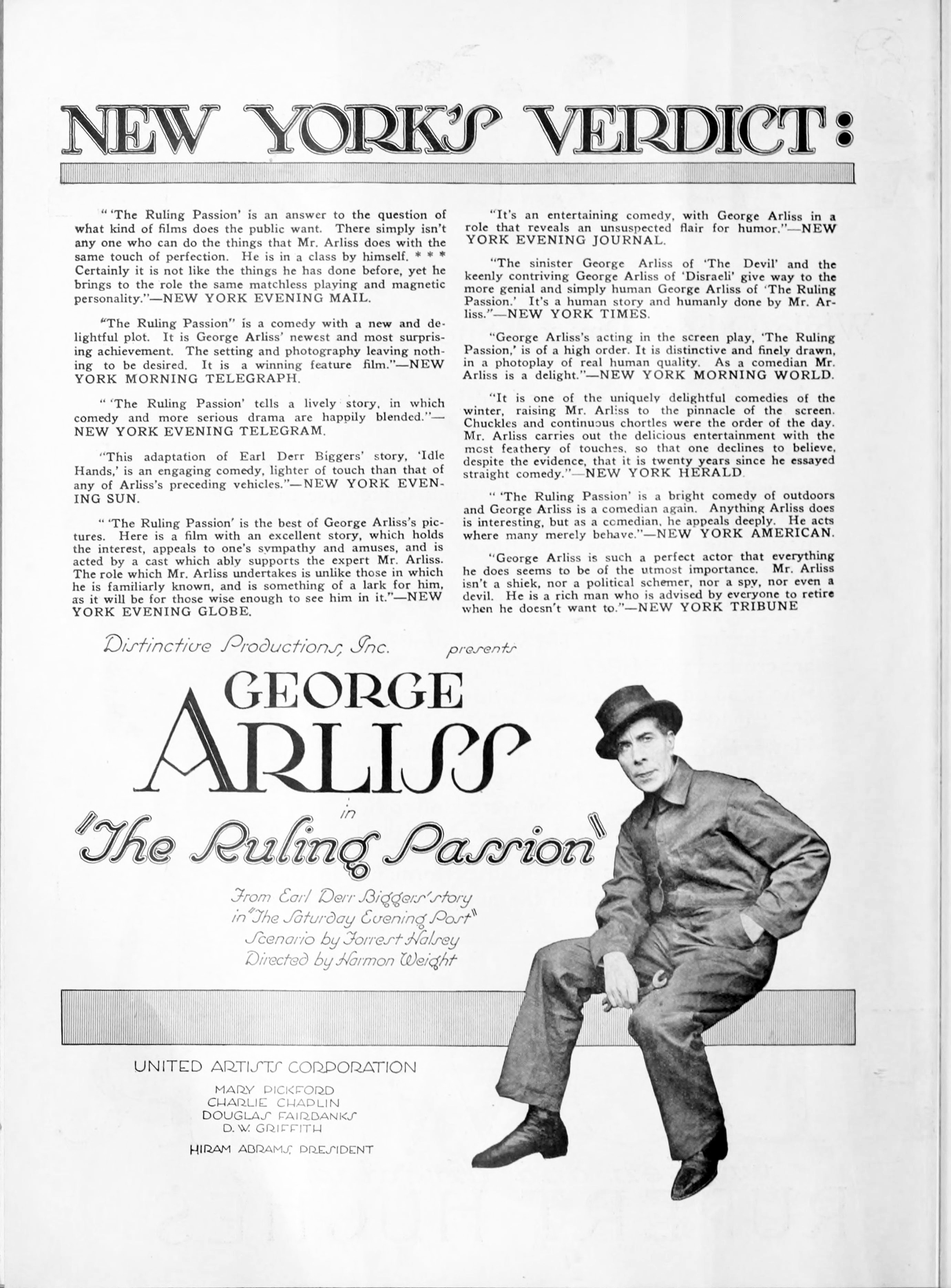
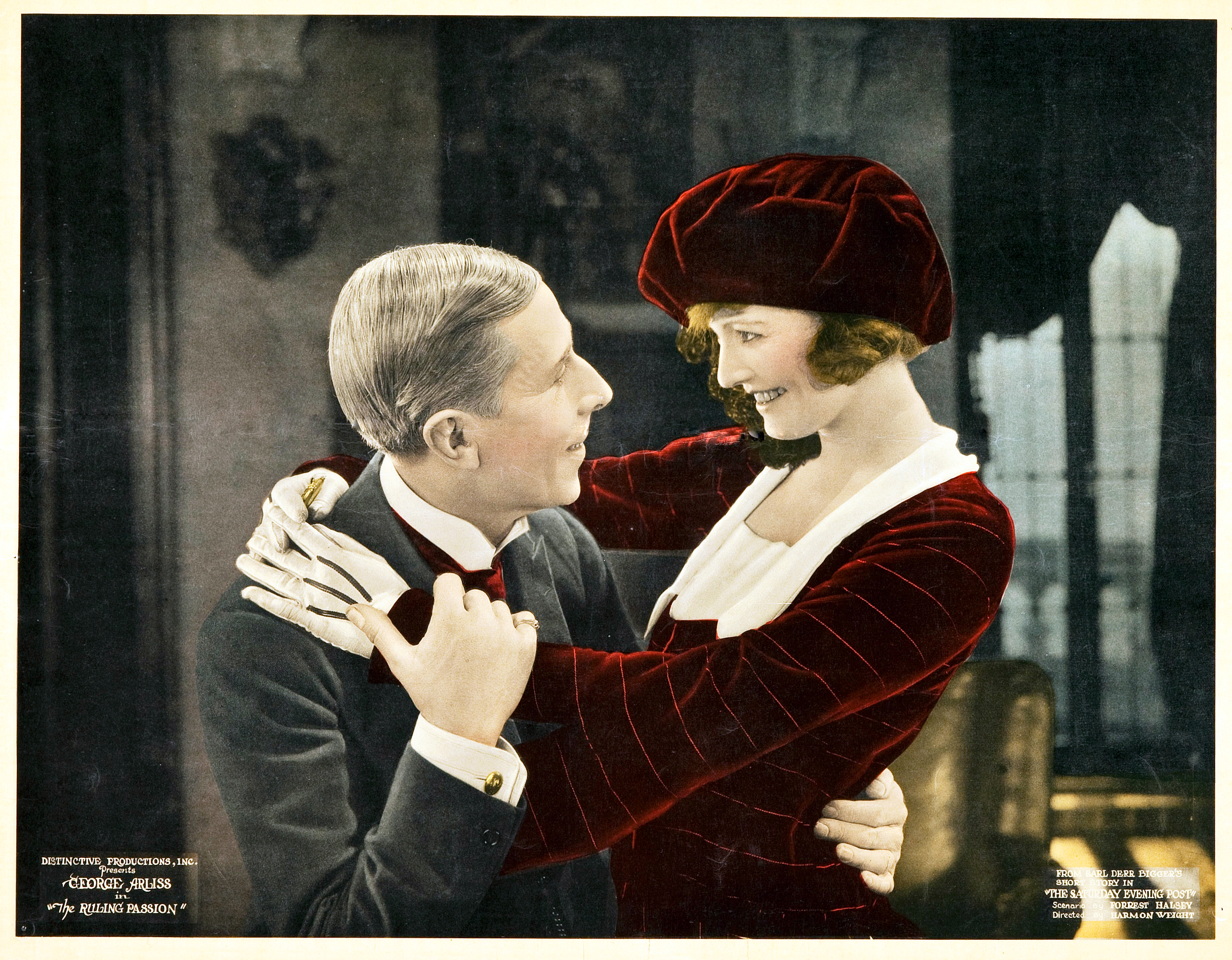
THE RULING PASSION – A Review of Mr. A’s 1922 Silent Film Comedy
Typically listed as a “lost” film, Mr. A’s 1922 silent film comedy, THE RULING PASSION, may exist after all. Hope is kindled by news that one or more foreign film archives may own a print. These include the Russian Gosfilmofond, the Cinémathèque Française, and the Belgian CINEMATEK. Also on your blogmeister’s “hopeful list” is the Dutch EYE Film Institute that has led the way by posting so many of its vintage holdings online.
THE RULING PASSION was based on a short story by Earl Derr Biggers, who later became famous as the creator of the “Charlie Chan” novels. Mr. A plays John Alden, an automobile tycoon who is forced into retirement by his doctor’s orders. Bored, he decides to invest in a business deal – a gas station – in partnership with a young man, Bill Merrick. Of course, Alden uses an alias so his young partner doesn’t know his colleague is practically Henry Ford. Alden and Merrick are swindled in the sale by the seller, Peterson, who competes against them with his new gas station.
Complications develop when Alden’s daughter, Angie, drives in and discovers her father pumping gas. She and Merrick meet and romance blossoms. Angie agrees to keep her Dad’s secret life from her mother but Mrs. Alden eventually stops by for a fill-up and discovers the truth. Alden and Merrick plan a successful marketing campaign, taking so much business away from their rival that Peterson offers to buy them out at a huge profit on their original purchase.
Bill asks Angie to marry him and he goes to her home seeking her father’s permission, unaware that his partner is Angie’s father. The ruse is happily revealed and Alden’s doctor has to admit that the adventure was healthful for Alden who can now return to work again.
The film had its New York City premiere on January 22, 1922, and received mostly excellent reviews. Released through United Artists, THE RULING PASSION was independently produced through a company, Distinctive Pictures, that was formed specifically to make George Arliss films. PASSION became the third Arliss film, following THE DEVIL (1920) and DISRAELI (1921). The success of the earlier two led to making the third, which in turn led to three more films being made.
A trade press story of the day:

Another story for the exhibitors:
Box Office tells the tale:
Doris Kenyon plays the role of Mr. A’s daughter, Angie. A popular screen actress she would play Mr. A’s wife nine years later in ALEXANDER HAMILTON (1931):

While THE RULING PASSION is still considered among the missing Arliss films, we are fortunate that he decided to remake the story as a talkie in 1931 renamed THE MILLIONAIRE. However, lettering on studio photos indicate that the talkie version’s working title continued to be THE RULING PASSION.
An original color half-sheet (22×28 inches) for THE RULING PASSION:
A Costume from THE HOUSE OF ROTHSCHILD (1934)
The Arliss Archives recently acquired a unique item: one of the costumes worn by Mr. A as Nathan Rothschild in his blockbuster, THE HOUSE OF ROTHSCHILD (1934). The ensemble consists of trousers and a vest. Alas, the jacket is missing but the acquisition is exciting nevertheless.
This is how the costume was displayed by the auction house. Based on the length of the trousers or breeches it confirms that Mr. A seems to have been about 5’8″.
The costume company tag in the lining of the trousers.

A rear view that moviegoers would have never seen.
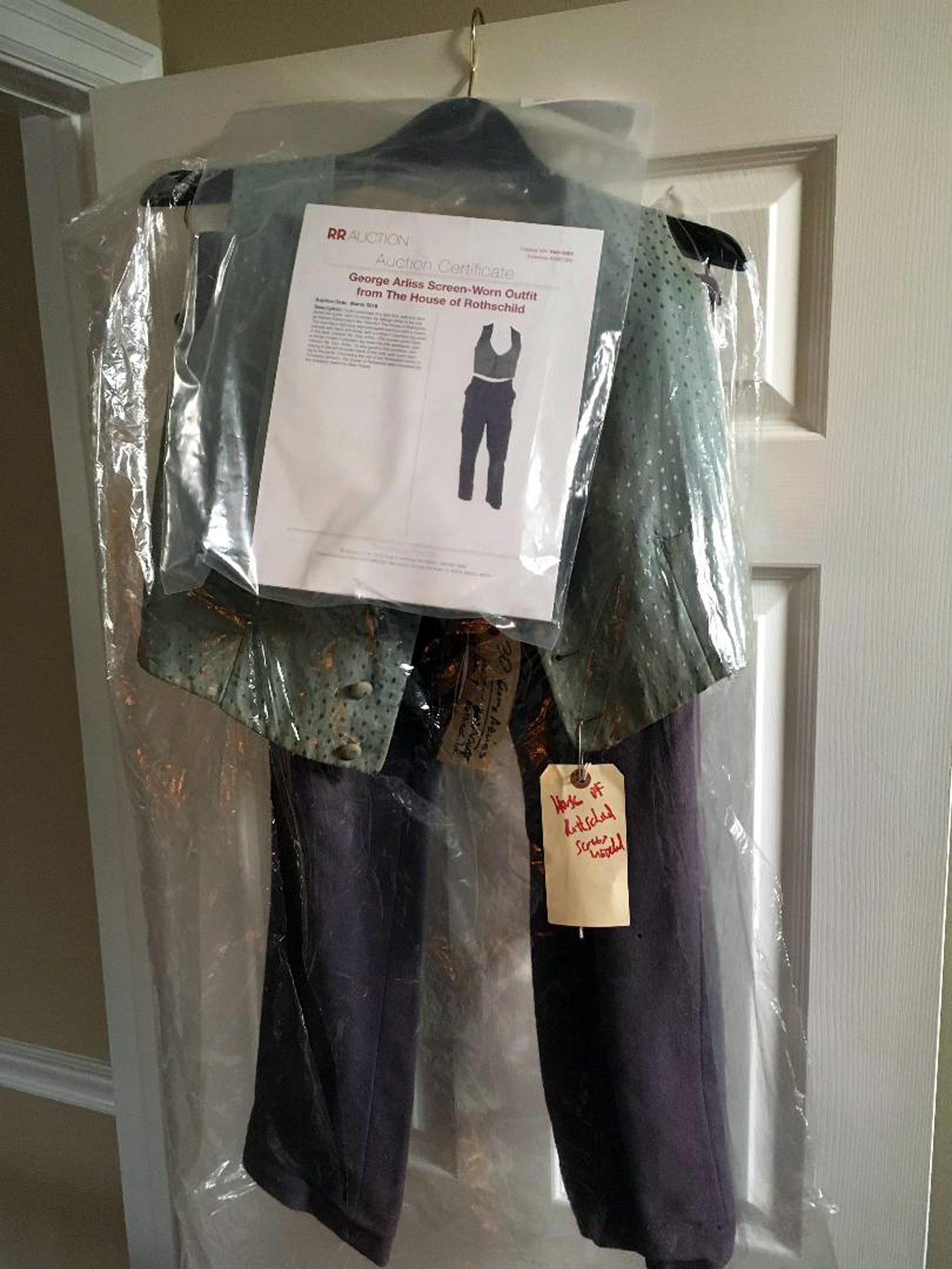
The Costume arrives at the Arliss Archives

The waistline is enlarged to accommodate the padding that Mr. A wore to suggest the historical Nathan’s corpulence.

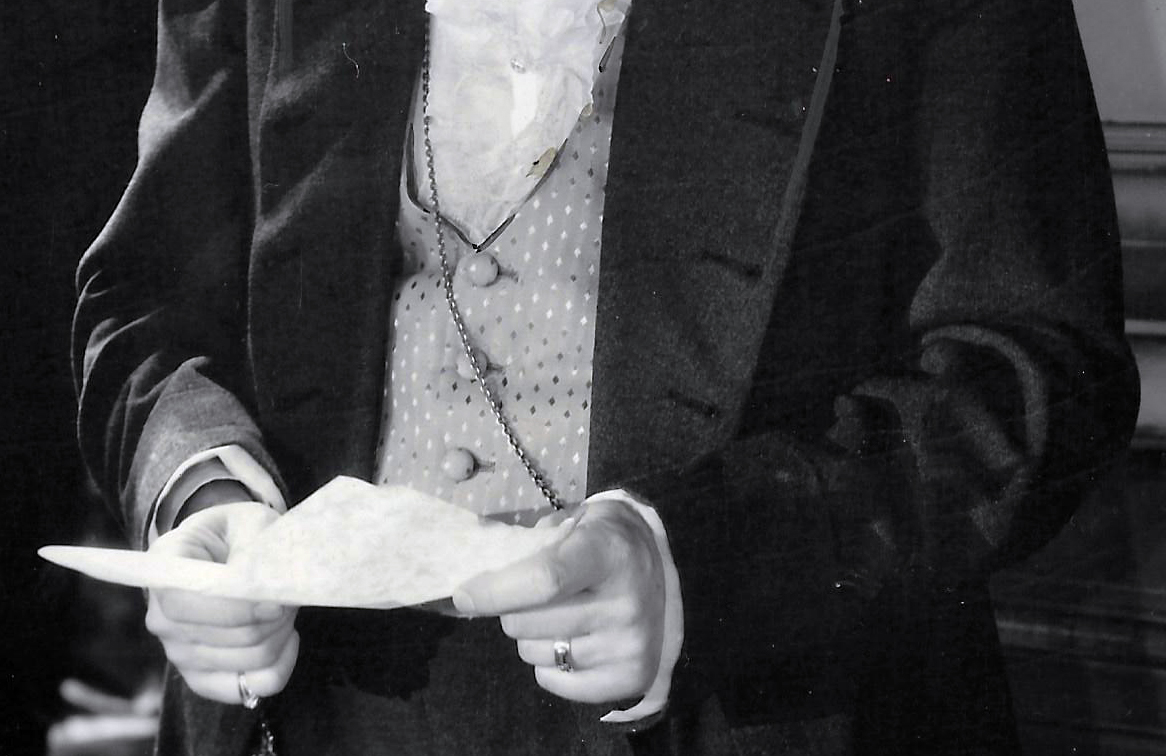
The vest was likewise let out around the waist to suggest Nathan’s girth. The small diamond pattern led me to search our collection of 8×10 ROTHSCHILD photos to match the scene(s) the costume was worn in.

By enlarging the stills to see the pattern on the vests I became aware of how many costume changes that Mr. A had in the various scenes. I found vests with large diamond patterns but I almost despaired of finding an exact match until I found this photo showing a scene that was cut from the film.

This enlargement of the photo above provides an exact match with our vest. This level of detail is impressive considering that none of these design patterns would have been visible to audiences even when watching on the “big screen” in 35mm.

A close-up of the ensemble including the now-missing jacket.

Happily, I found a photo from the climatic scene where Rothschild receives news of the Battle of Waterloo. Our costume is beautifully viewed here.

Our vest in close-up!

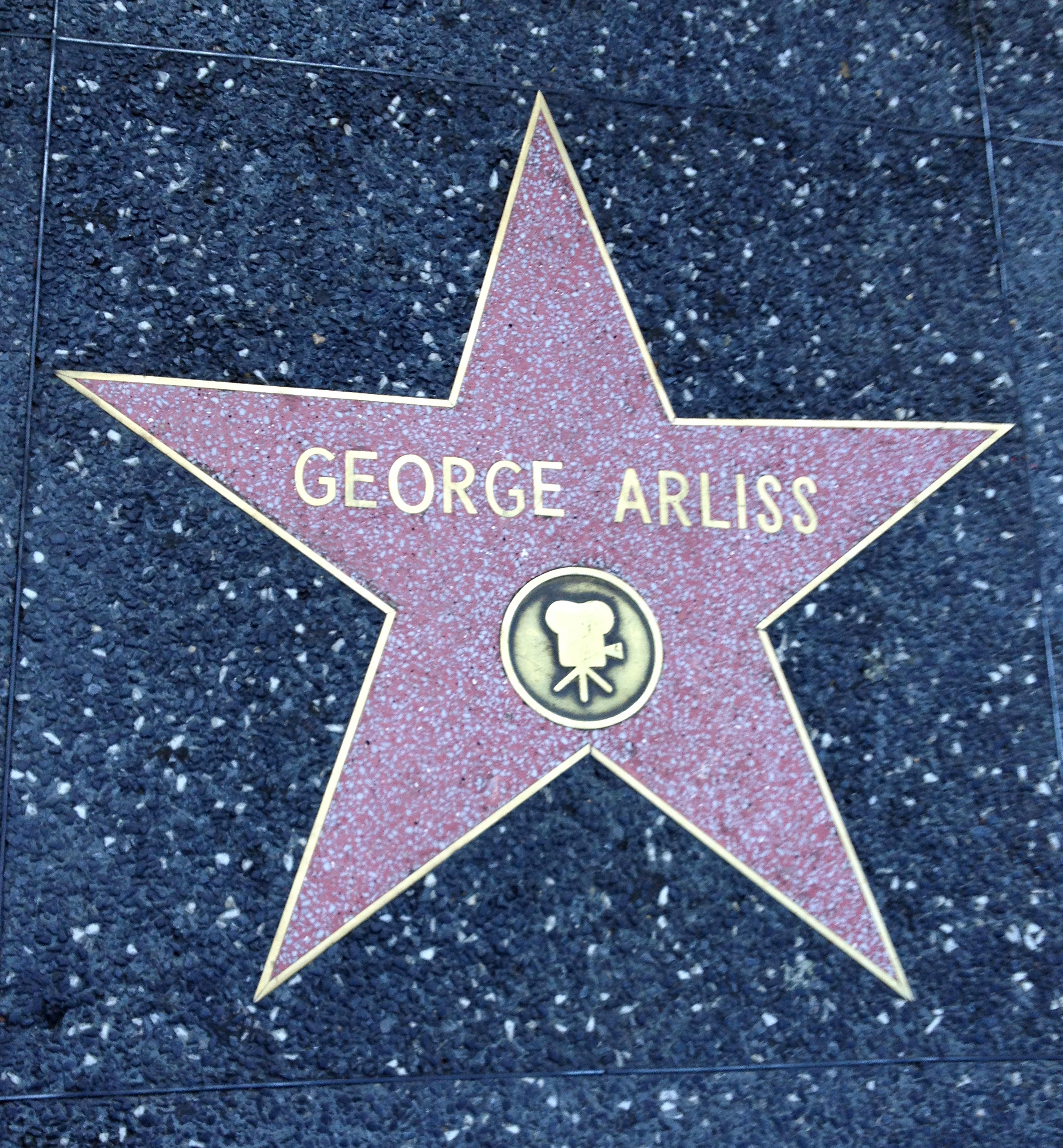
Mr. A’s Star on the Hollywood Boulevard Walk of Fame.
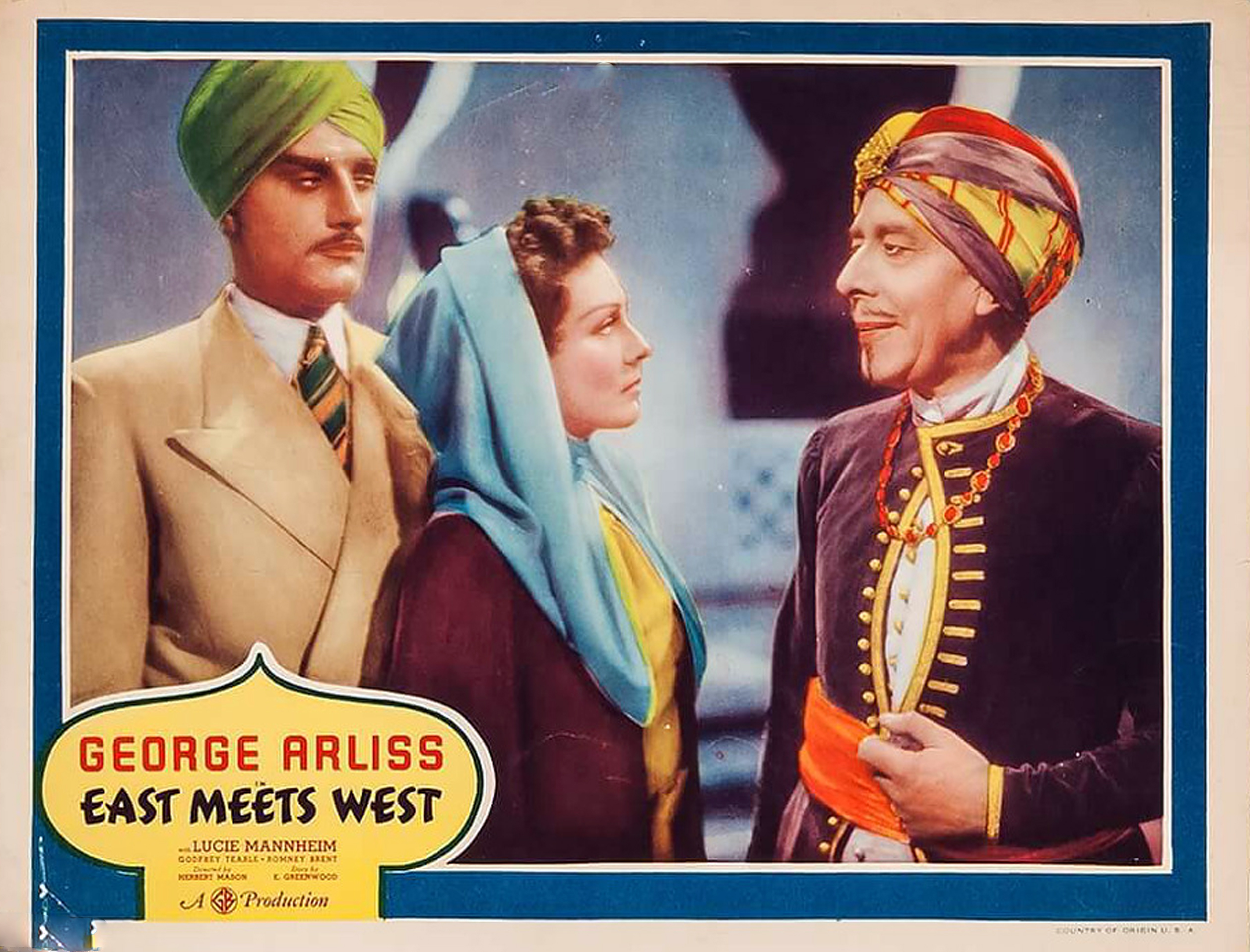
EAST MEETS WEST (1936) – A Surprisingly Rare Film these Days!
We understand that a pristine 35mm print of EAST MEETS WEST is held by the British Film Institute. Unfortunately for us, the only source material in circulation at the moment is derived from an old VHS tape, but as they say, ’tis better than nothing:
EAST MEETS WEST is Mr. A’s third British-made film that was produced in London from January to April 1936. Its production was halted for Mr. A to attend the funeral of King George V in January. A humorous tale of international intrigue, Mr. A seems to be channeling his Rajah of Rukh from THE GREEN GODDESS, although his Sultan here is whimsical, not lecherous.
Cover of Press Book for EAST MEETS WEST:

Full Page Woodcut Design from Press Book:

Press Book Pages showing advertising materials available to theaters:


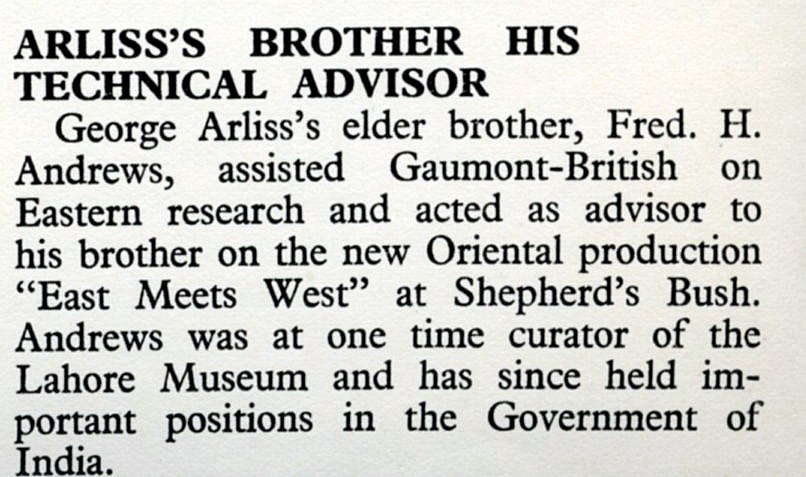
Mr. A’s brother, Fred Andrews, was in the British diplomatic corps and was hired by the studio as a technical advisor for the film:
The film had a strong supporting cast including (left to right) Norma Varden, Ballard Berkekley (later of “Faulty Towers” fame), Mr. A of course, and Godfrey Tearle:

DR. SYN (1937) – A Review of Mr. A’s Final Film
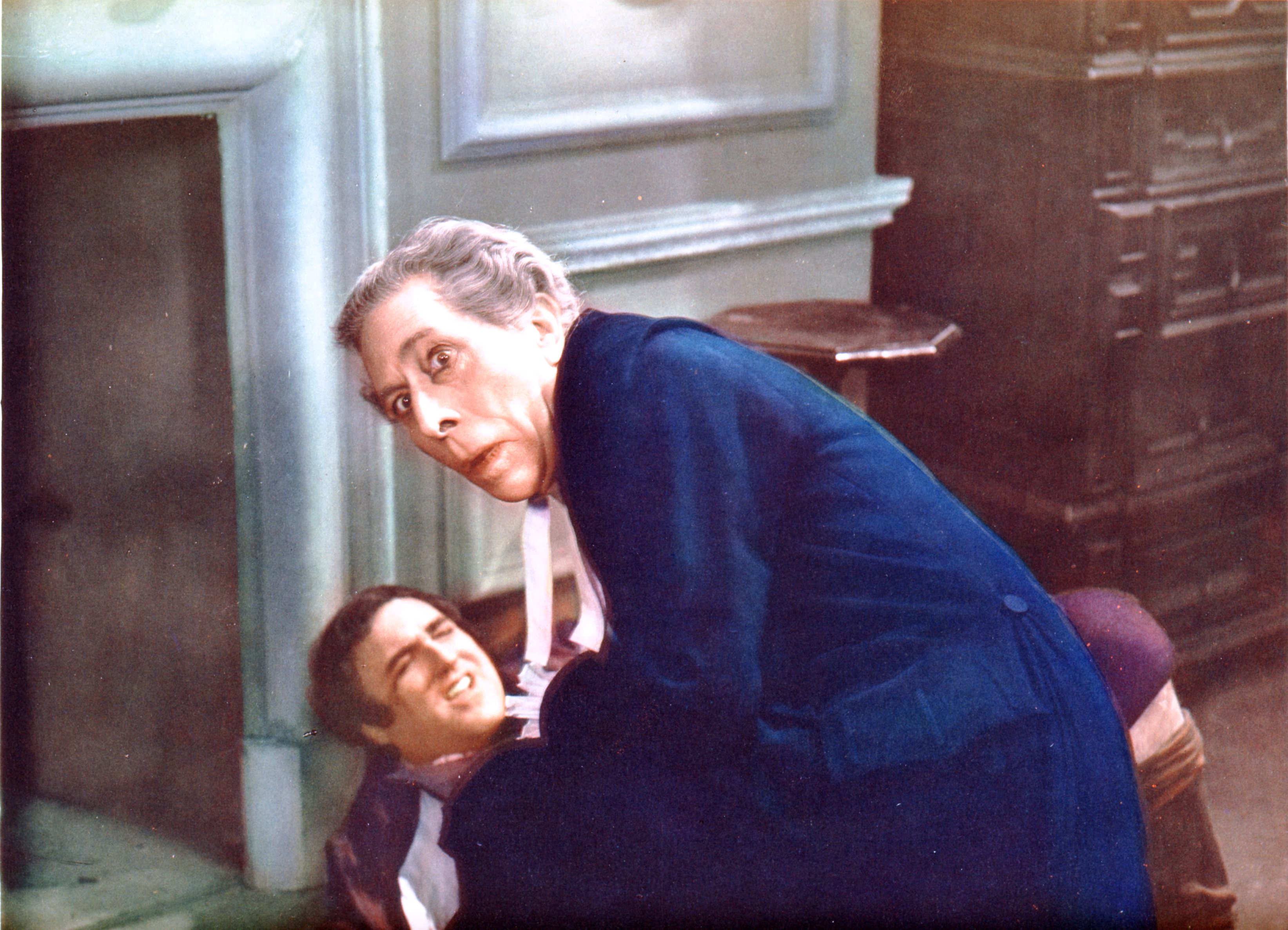
DR. SYN is the final British film and the last film made by Mr. A – we prefer to think of it as Mr. A’s most recent film. Indeed, it is among his best. The reviewer for the New York Times praised it by saying the he found it superior to the MGM blockbuster TREASURE ISLAND (1934), a film with a similar story involving smuggling in the late 18th century.

The chief thing your blogmeister noticed about this particular Arliss film is that Mr. A heads an ensemble cast rather than carrying the entire story on his back as he had with so many of his earlier films. He had little to say in his memoirs about making Dr. SYN other than noting that the story took place in his beloved Kent. He said it had no “plus value,” that is, an element that people would think about after the movie was over. Mr. A singled out for praise the director, Roy William Neill, who would later work in Hollywood directing a number of the Sherlock Holmes films starring Basil Rathbone and Nigel Bruce. Mr. A also praised producer Edward Black much more enthusiastically than the faint praise he gave Michael Balcon, the producer of his previous four UK films.

The London premiere of DR. SYN was graced by no less a person than Queen Mary herself. Margaret Lockwood recalled in her memoirs how nervous she was as she was waited for Her Royal Majesty with co-stars Mr. A and John Loder.

George Arliss made a grand total of eighteen sound feature films from 1929 to 1937, an enormous output (plus an elusive short UK film he made in 1931 where he recites Disraeli’s speeches), and another six silent films from 1921 to 1924. Whereas Mr. A’s hit plays ran between two and five years, his most successful films would run in movie theaters for only a week or two. Had Mr. A’s movies ran on the average as long as his plays before he appeared in a new one, it would have taken him over forty years to complete his eighteen films!

Gala Hollywood Premiere for THE HOUSE OF ROTHSCHILD – March 14, 1934
Grauman’s Chinese Theater was the place to be on the night of March 14, 1934. The occasion was the Grand Premiere of THE HOUSE OF ROTHSCHILD and the Hollywood celebrities of the day turned out. Studios moguls Darryl Zanuck, Louis B. Mayer, Sam Goldwyn, and even old Carl Laemmele of Universal Pictures were among those attending. Lots of movie stars too, some of whom I can’t quite identify but maybe you can. They are treated like royalty regardless.
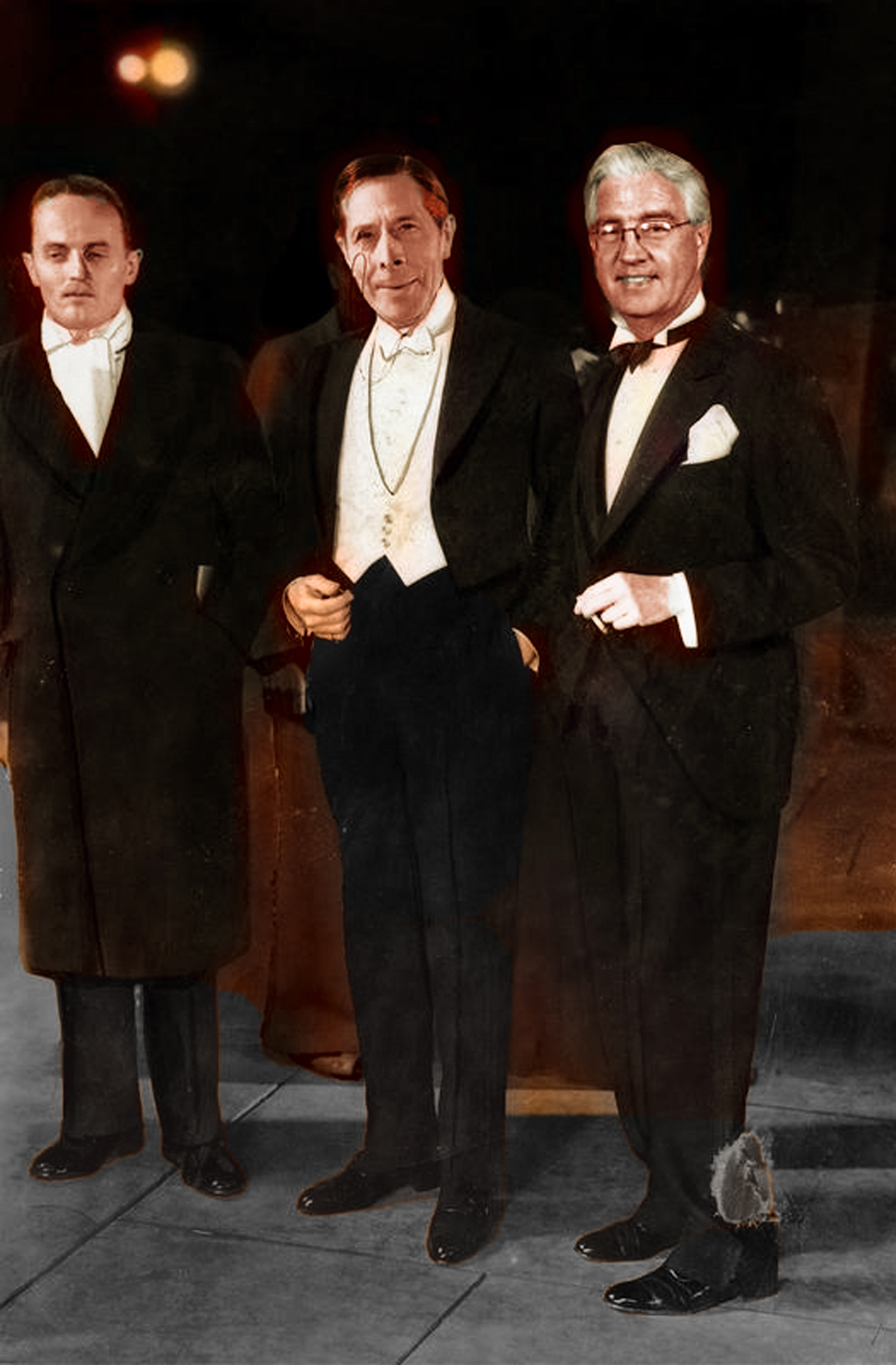
Of course, the center of attention was the film’s star – George Arliss. Here is Mr. A being flanked by Darryl Zanuck on the left and Sid Grauman on the right. The color is by Moi:

The scenes you are about to see is “raw” footage and in some cases catch the same action from two different camera angles. There is no sound but you can clearly see attendees speaking into a microphone, strongly suggesting a live radio broadcast. The white-haired gentleman who seems to be the radio host is veteran actor Lawrence Grant, who was apparently “moonlighting” when he wasn’t making films. Mr. A gives him a big handshake. I have added captions to note various individuals that I could recognize. I added a music track starting with the opening music of the film itself.

A conceit of your blogmeister: through the magic of Photoshop I am taking the place of Sid Grauman in the photo from above. A little bit of time travel:

New on DVD! THE MAN WHO PLAYED GOD (1932) with Bette Davis
I’m a little late on this but Warner Archive recently issued the sixth official studio DVD release of Classic Arliss. This time it’s Mr. A’s blockbuster, THE MAN WHO PLAYED GOD:

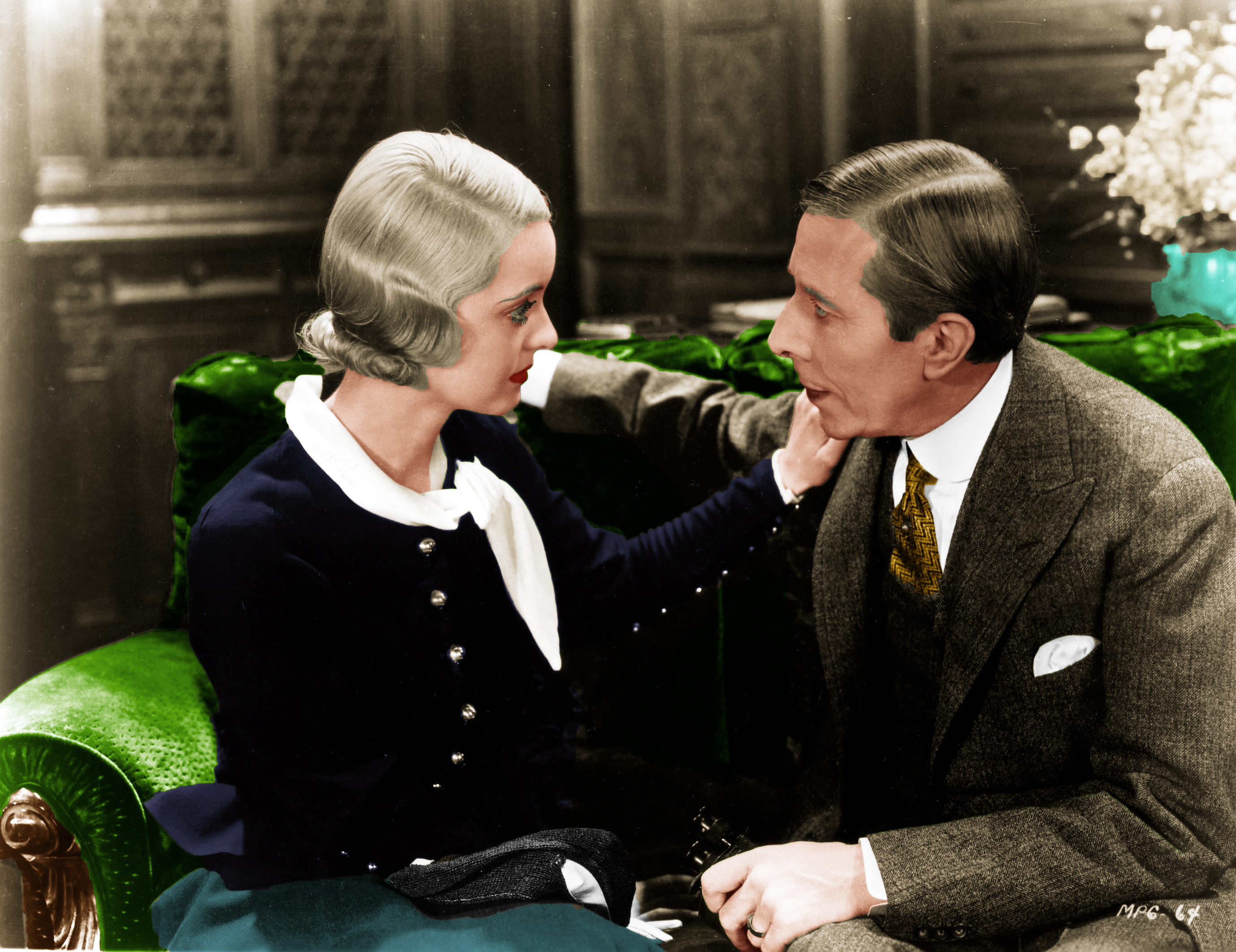
Mr. A arranged for Warner Bros. to hire a young unknown actress named Bette Davis to play the role of his fiancee in the film. This proved to be Bette’s breakthrough film:

George Arliss plays wealthy concert pianist Montgomery Royale who seems to have it all:

Royale is in the wrong place at the wrong time and is injured by a bomb in a terrorist attack (yes, even then). The blast destroys his hearing and he can no longer hear his own music. His life ruined, he becomes so depressed that he attempts suicide:

Royale learns lip-reading, which turns out to be a mixed blessing. He goes from believing that God has abandoned him to the realization that he has become God’s instrument to help the less fortunate:

But through lip-reading he learns that his fiancee loves another man. Royale asks himself, “I wonder what God would do in a case like this?” This strangely inspiring film still moves viewers over 80 years later. A true classic:

Mr A later performed a live radio broadcast of this story that was heard around the world. To hear this historic broadcast, please click on “Radio” in the right hand column, and then click on THE MAN WHO PLAYED GOD.

CARDINAL RICHELIEU (1935) – First Time on DVD!
Twentieth Century-Fox has just released on DVD the classic George Arliss costume film, CARDINAL RICHELIEU. This makes the fifth Arliss film to receive an official studio home video release:

These are screen captures of the main titles – quite a line up of talent both in front of and behind the cameras:

Filming a scene with Maureen O’Sullivan:

CARDINAL RICHELIEU plays in the Middle East:

The back cover of the DVD snap case:

For more photos, info, and to hear the radio version of this terrific film, please click on the CARDINAL RICHELIEU link on the right-hand column.


You must be logged in to post a comment.