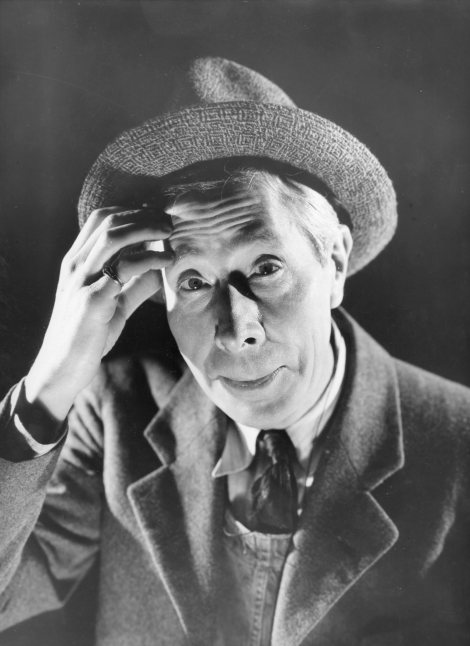
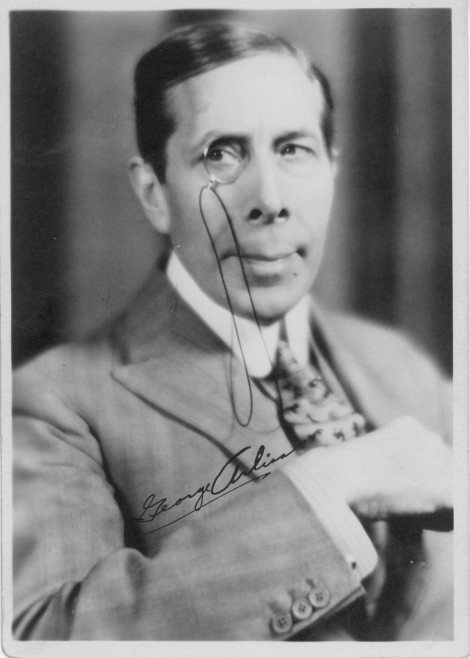
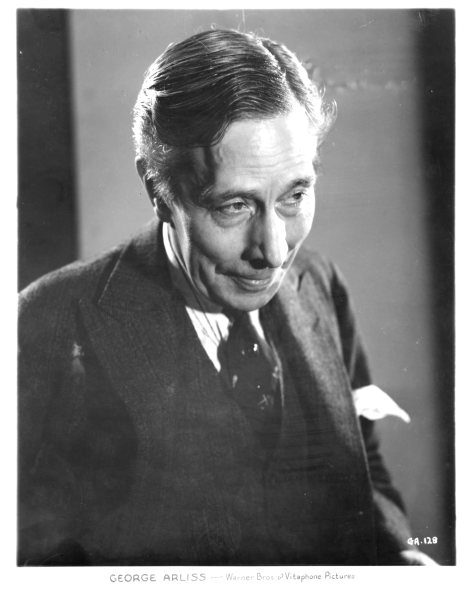
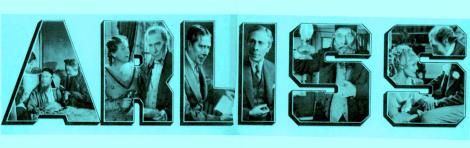
A Centennial Salute to DISRAELI – the Play, the Silent Film, the Talkie, the Radio Broadcast

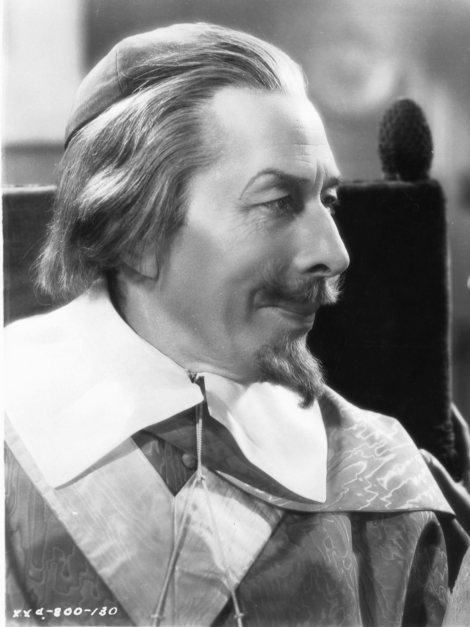
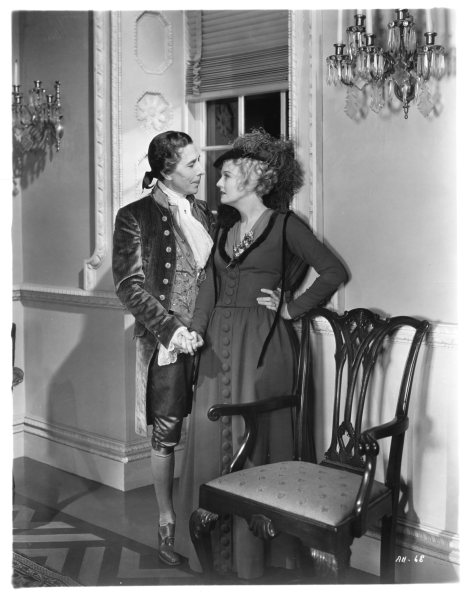
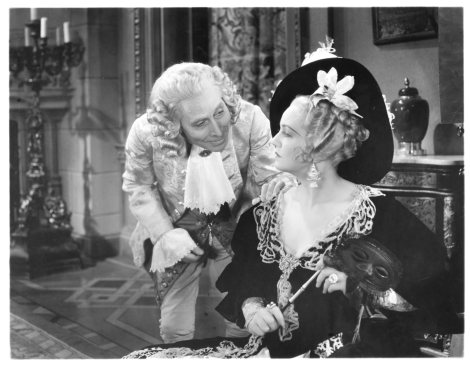
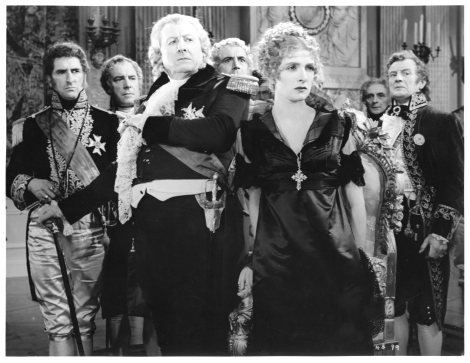
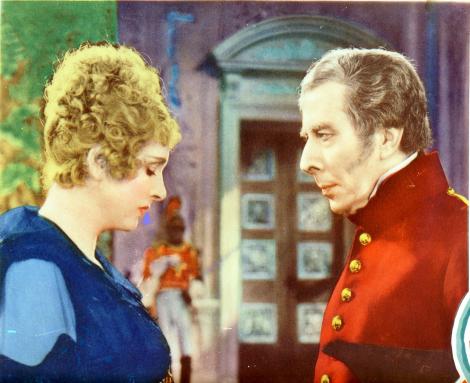
I doubt that there is another dramatic work, excepting Shakespeare’s plays, that has been translated into so many different mediums in the performing arts as DISRAELI. First debuting as a play in 1911, it was turned into that most peculiar relative of the spoken stage – a silent film, in 1921. At the end of that decade this vehicle was reinvented as an Academy Award-winning “talking picture.” Nearly a decade later, the play-cum-silent film-cum-talkie was turned into an hour-long radio broadcast heard around the world via the CBS network and shortwave in 1938. Perhaps the most remarkable aspect of DISRAELI is that ALL of its various incarnations starred the same actor – George Arliss.


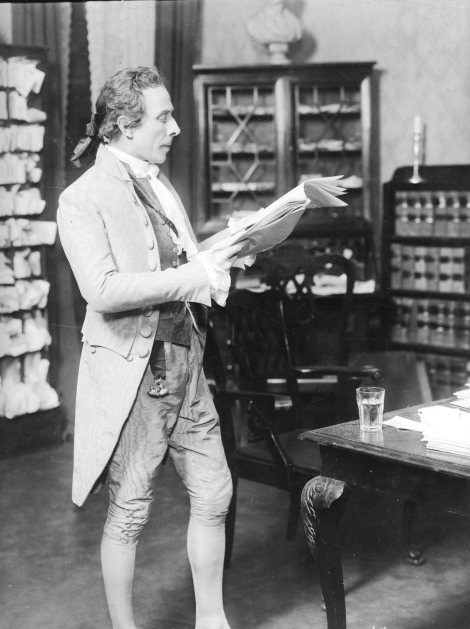
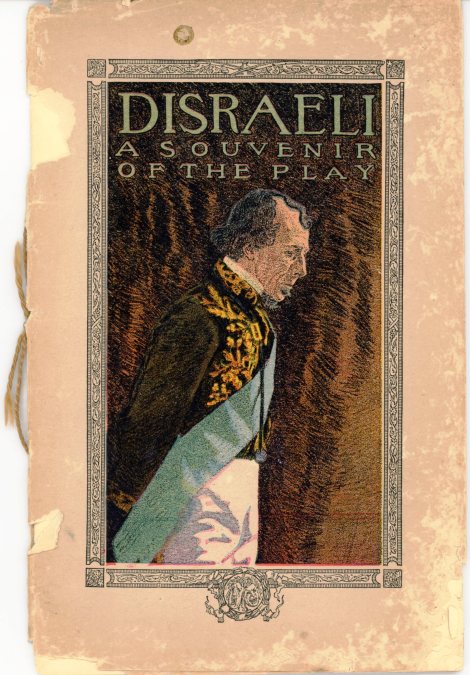
A Souvenir Program from the 1911-12 season

The play was written specifically for Mr. A by the then-famous playwright Louis N. (for Napoleon) Parker. There was one problem – Parker had never seen Arliss perform on the stage. Then Parker quit saying that a play about Benjamin Disraeli, the British prime minister of the 1870s, couldn’t be written. Mr. A convinced Parker it could be written and explained how. Parker completed his play due largely to its star’s role as midwife.

The final scene where Disraeli receives a telegram he fears will tell him of his wife’s death: Mr. A with Marguerite St. John, the first actress to play Lady Beaconsfield (Mrs. Disraeli) on the stage.

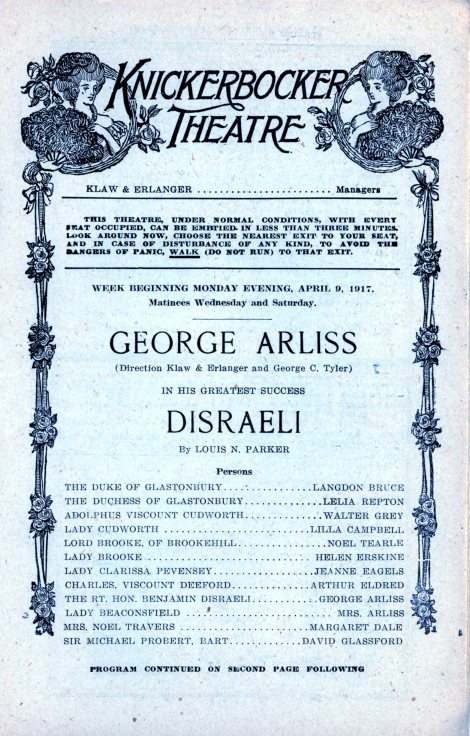
Mr. A starred in DISRAELI for five consecutive years, from 1911 to 1915, then revived it thereafter. Here is the cast for a 1917 revival – note that Florence Arliss plays Lady Beaconsfield. Also, note that the ingenue role of Lady Clarissa is played by the talented, ill-fated Jeanne Eagels:

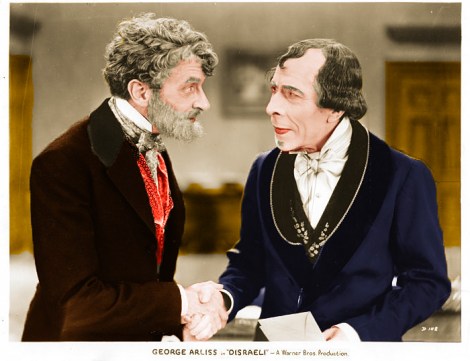
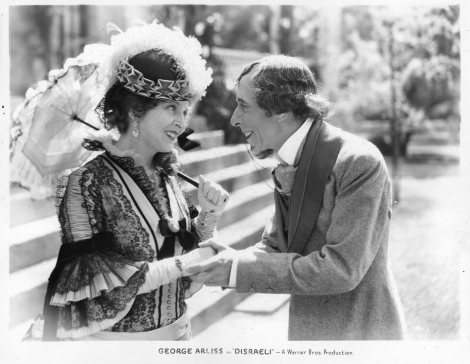
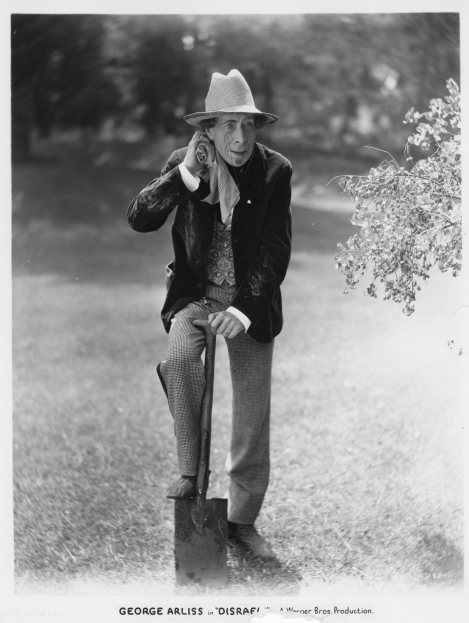
The 1921 silent film is now lost but a number of stills have survived….

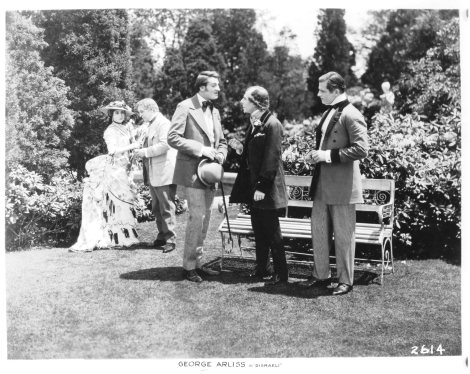
No longer stagebound, the garden party scene was filmed outdoors:

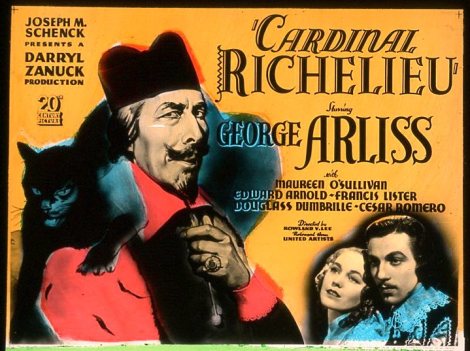
A rare glass slide advertising the silent film in theaters:

Margaret Dale plays the spy, Mrs. Travers. Dale had played the role continuously since 1911 and never missed a performance, not even in this film version.


Florence Arliss as Lady Beaconsfield tries to console her husband: he has just written a bad check – to buy the Suez Canal!

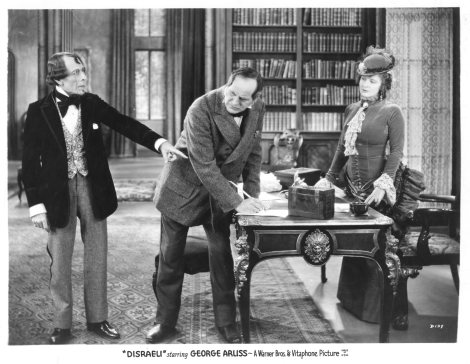
Warner Bros. persuaded Mr. A to make the play into one of the first full-length talking pictures. He did and won the Best Actor Academy Award:

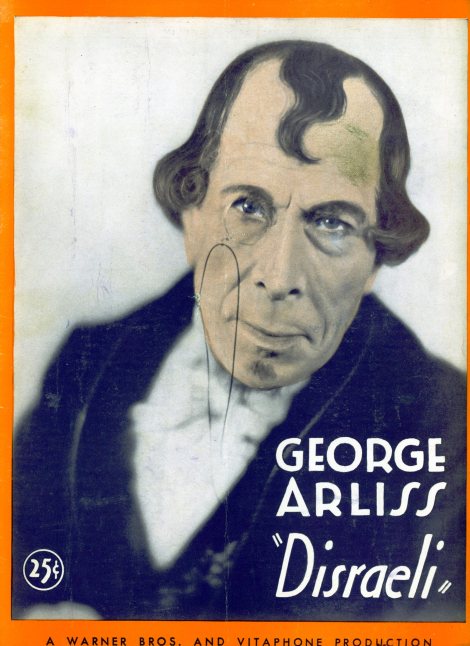
A souvenir program for the 1929 film

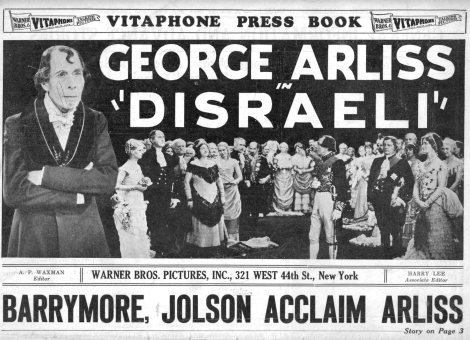
Here’s a detail from the Warner pressbook telling theater owners how to sell the movie to their patrons:

Exteriors were filmed at the old Busch Gardens during the summer of 1929 by ace cinematographer Lee Garmes. This scene looks pretty but Mr. A recalled that it was hot as ….blazes.

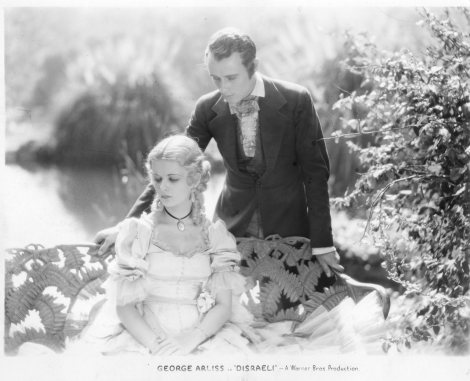
The romantic young couple, Lady Clarissa and Lord Deeford, were played by Joan Bennett and Anthony Bushell:

The 1929 film cast and crew, from the original program:

The ever-reliable Ivan Simpson plays financier Hugh Myers, a fictional character based on the real-life Lionel Rothschild who financed Disraeli’s purchase of the Suez Canal:

A flyer highlighting scenes from DISRAELI:

Outtakes – not every scene made it into the final production:

Disraeli and Gladstone exchange sharply divided political views in the House of Commons – but not onscreen.


Mrs. Travers meets Disraeli – but not onscreen. Doris Lloyd plays the spy, the one time that Margaret Dale missed a performance!


We only glimpse the Prime Minister working in his garden and never to this extent!

Back to the movie:

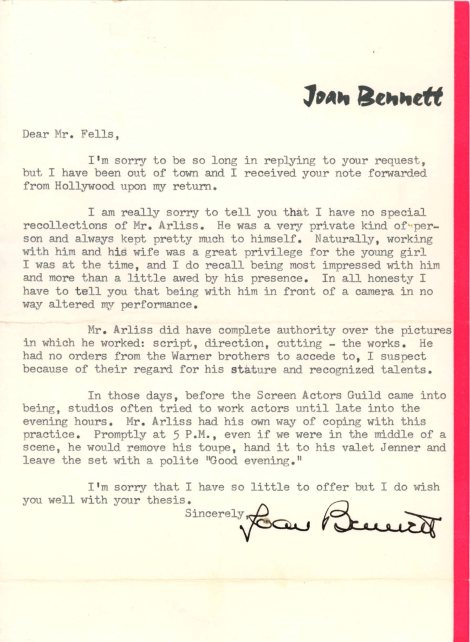
Joan Bennett at the beginning of her very successful career. When I showed DISRAELI in college in 1970, I had the idea to write a thesis and wrote to Ms. Bennett to ask what Mr. A was like to work with. Here is her reply:

Now about that bad check for the Suez Canal: Congress didn’t invent “stop gap spending.” Here the Prime Minister threatens to ruin the Bank of England if its president, stuffy Lord Probert (David Torrence), doesn’t cover the check:

Probert signs to save the Bank but is dismayed that Disraeli has such power.


In the dramatic payoff, Disraeli confides that as Prime Minister he has no such power, “but he doesn’t know that.”

Here is Mr. and Mrs. A in the final scene involving the telegram again:

On January 17, 1938, George Arliss made his dramatic radio debut on the CBS network with DISRAELI. This live broadcast on the Lux Radio Theater was heard all over the world and brought to the microphone much of the cast of the 1929 film version including Florence Arliss, Ivan Simpson, Doris Lloyd, and David Torrence. Mr. A was nearly 70 years old and noted that more people heard this one broadcast than all the audiences combined from his years performing in the play, the silent film, and the talkie:

Here’s the photo’s original press caption:

Want to hear this broadcast from long ago? It is right at your fingertips so just click below:

The Kings of Warners

The Arliss Archives include holdings indirectly related to George Arliss. In this post, we’ll take a look at some material highlighting Mr. A’s colleagues. When Warner Bros. signed George Arliss in the summer of 1928 to make three “talking pictures,” he joined the ranks of two other super stars of that studio – Al Jolson and John Barrymore.

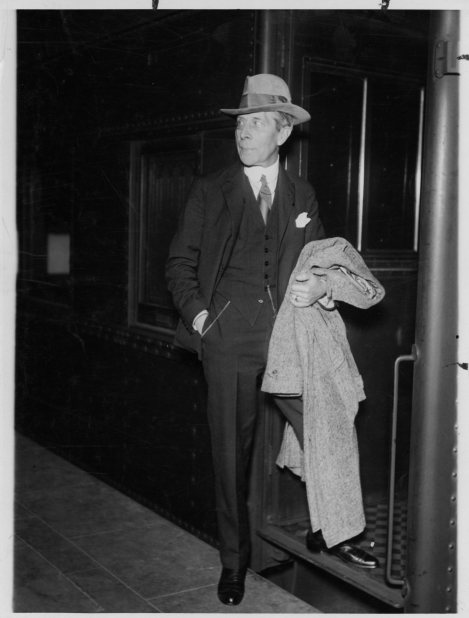
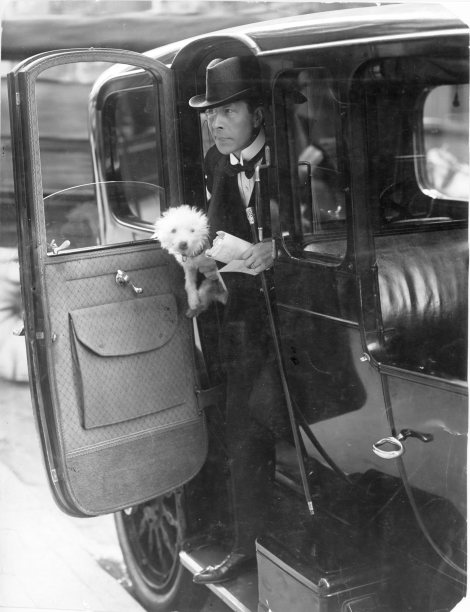
No, this photo is not Mr. A arriving at Warners. I can’t place the occasion but it looks like a movie still. It was taken some time in the early to mid 1920s (judging by the automobile) but the original photo annotation suggests a candid shot. Florence Arliss was fond of little dogs, Mr. A apparently less so:

Al Jolson was the musical comedy sensation of Broadway and Warners had to pay dearly to acquire his talents. Jolson thought the Brothers were on to something with Vitaphone but they didn’t have much ready cash. Al agreed to take partial payment in studio shares of stock and became wealthy as a result:

Everybody knows that THE JAZZ SINGER (1927) was the first commercially successful sound film. Less well known is that the follow up, THE SINGING FOOL (1928), was an even bigger moneymaker:

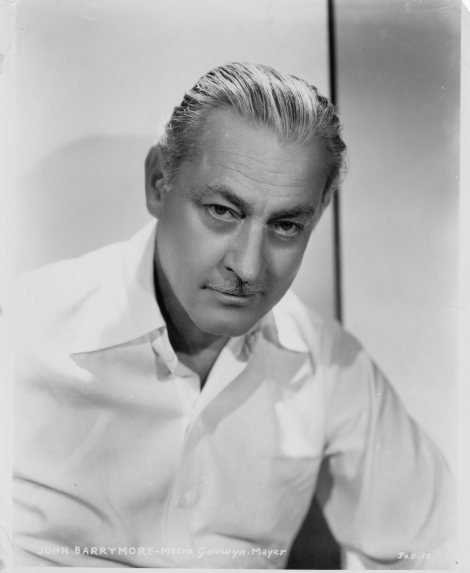
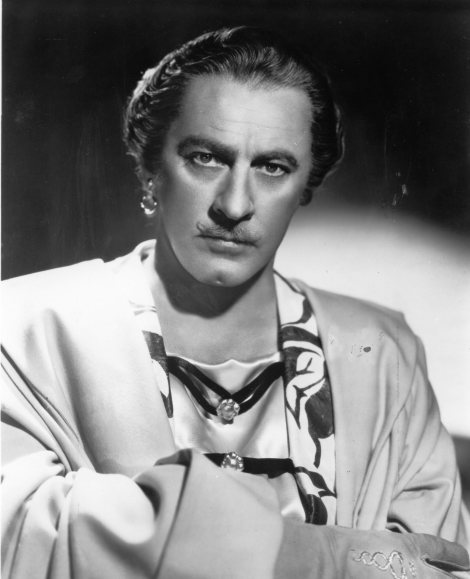
John Barrymore had made four epic silent films for Warners in the mid 20s following his theater triumph in HAMLET, so the Brothers were eager to get him back when sound came in. In those days, it seems that no expense was spared in making a Barrymore film.

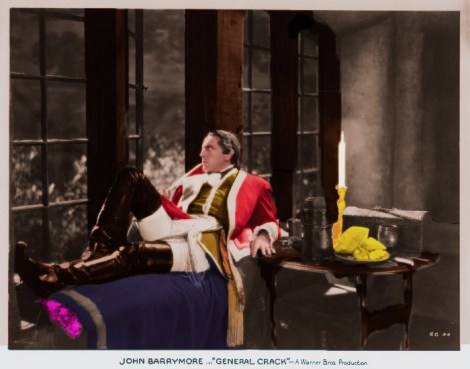
The composition of this photo from his first talkie, GENERAL CRACK (1930), seems inspired by late 18th century portraits:

Fans could even read the novel of GENERAL CRACK in movie magazines of the day, complete with an elaborately painted cover portrait of the Great Profile:

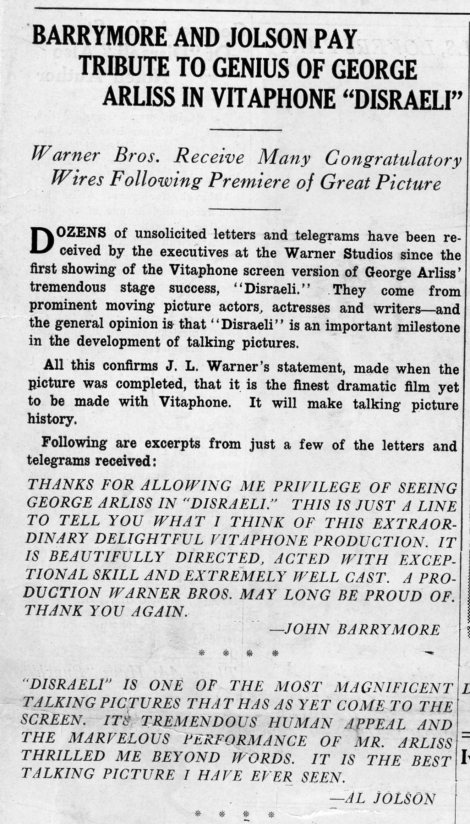
Kings usually help each other and the protocol was no different at Warners. Here Barrymore and Jolson lend their support to Mr. A’s first talkie:

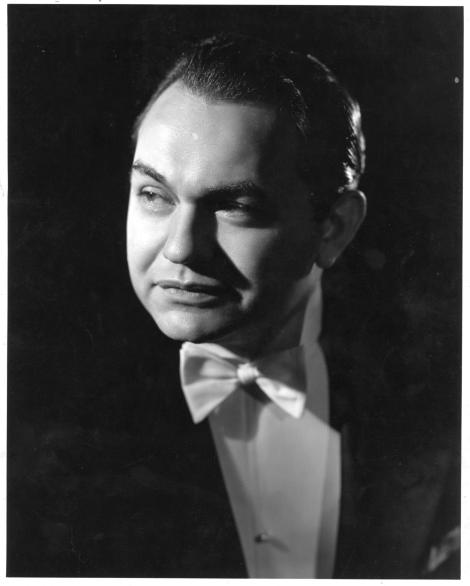
Warners also acquired an upcoming dramatic star of the theater who had actually corresponded with George Arliss some 20 years earlier, then appeared in support of Mr. A on the stage in 1920. Here is an uncharacteristically dapper Edward G. Robinson:

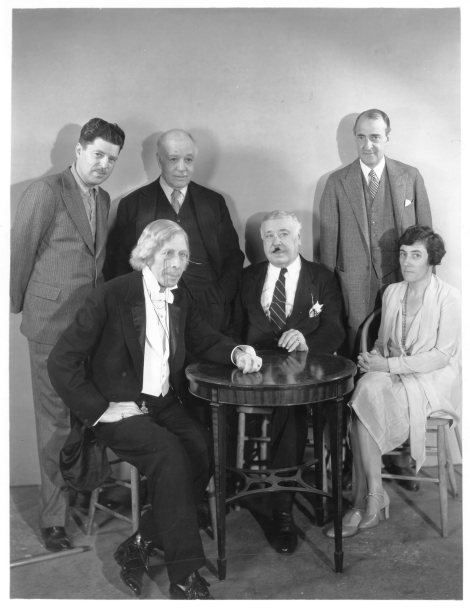
This next photo might be called, “Kings in Exile.” Mr. A is in costume for OLD ENGLISH (1930) and the film’s director Alfred Green stands to his left. The other three gentlemen are all legendary stars of the theater: standing behind Mr. A is Otis Skinner; seated next to him is Wilton Lackaye; and the gentleman standing on the right is Winthrop Ames who produced all of the Arliss theatrical hits of the 1920s. The lady is the equally legendary Maude Howell, who was Mr. A’s stage manager, then associate director, associate producer, and contributing writer on the Arliss films:

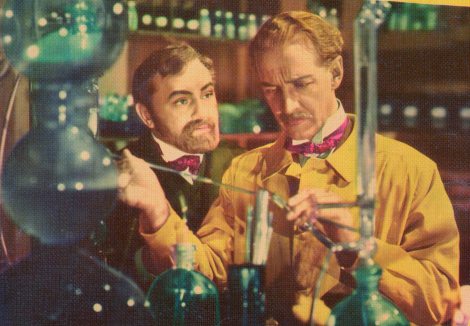
Eventually, the Kings of Warners followed in Mr. A’s footsteps in making biopics (historical biographical films). Here Edward G. Robinson discovers the cure for syphilis in DR. EHRLICH’S MAGIC BULLET (1940) with Otto Kruger:

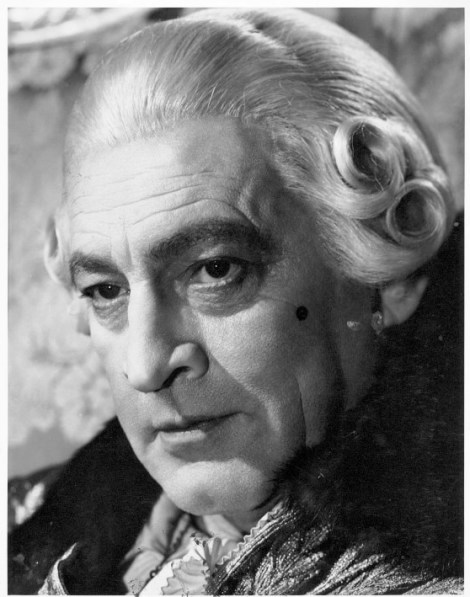
John Barrymore resumed wearing a powdered wig to portray King Louis XV in MARIE ANTOINETTE (1938):

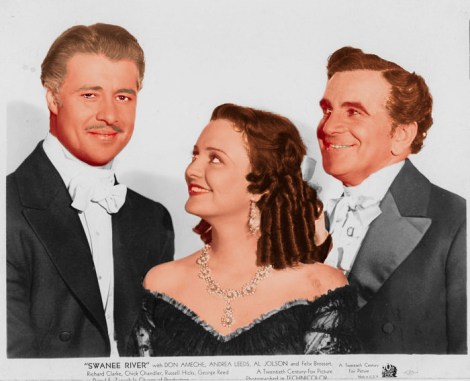
Darryl Zanuck even persuaded Al Jolson to play 19th century minstrel E.P. Christy in the Technicolor SWANEE RIVER (1939) with Don Ameche and Andrea Leeds as Stephen Foster and his long-suffering wife. This is a b/w photo rendered into faux Technicolor:

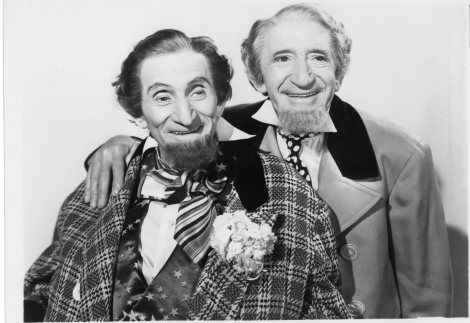
And now for something completely different – these two gents could be the maternal and paternal grandfathers of the Marx Brothers (in an artistic sense, they were), but they’re actually the Broadway producer/comedy team of Joe Weber and Lew Fields. These fellows invented the dramatic parody in the 1890s that’s been a staple of American comedy ever since, right up to today’s skits on SATURDAY NIGHT LIVE, making them theater kings in their own right:

Beginning their act in 1877, here they are in 1940 still going strong. Arliss was a relative latecomer only beginning his career in 1887!

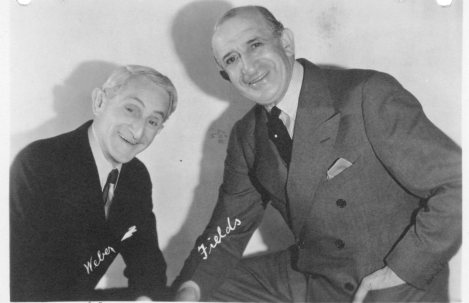
Out of costume, Joe and Lew looked more respectable when they moved to Hollywood in the late 1930s. There they spent many delightful evenings reminiscing about the old days with their friend, Mr. A (and it would be great to find a photo of the three of them together!):

Next week’s post will be very special in celebration of Mr. A’s birthday on April 10th. We’ll take a look at his masterwork – DISRAELI – the play, the silent film, the talkie, and the radio broadcast. With the exception of Shakespeare, I doubt there has been another dramatic work that has been adapted into so many different media as DISRAELI, and which starred the same actor.

The Arliss Women, Part Deux

As promised, here is the second installment in our review of some of the gifted actresses who appeared in the Arliss films.

Loretta Young, like Mr. A, followed producer Darryl Zanuck when he left Warner Bros. for 20th Century-Fox. Young would make some of her best films there beginning with THE HOUSE OF ROTHSCHILD (1934) where she played the role of Nathan Rothschild’s (Arliss) daughter Julie:

With Robert Young. For whatever reason, the original still reversed the image but your blogmeister corrected it.

A frame capture from the Technicolor finale of ROTHSCHILD:

Doris Kenyon was a silent screen star who was married to another silent screen star, Milton Sills. They made several films together during the 1920s and Kenyon also appeared in the Arliss silent, THE RULING PASSION (1922). When Sills died suddenly in late 1930, Kenyon planned to retire but Mr. A persuaded her otherwise.

Doris Kenyon as Betsy Hamilton in ALEXANDER HAMILTON (1931)

Kenyon joins Mr. A in his mandatory afternoon tea break on the HAMILTON set:

A detail from a HAMILTON lobby card with Dudley Digges:

Another HAMILTON lobby card with Lionel Belmore as Old Gen. Schuyler – in fact Belmore was only a year older than Mr. A!

Two year later Arliss and Kenyon played very different roles in VOLTAIRE (1933), she as Mme. Pompadour…

…mistress to King Louis XV, played by Reginald Owen:

Mary Astor was leading lady to John Barrymore and Douglas Fairbanks in the 1920s, and a memorable femme fatale to Humphrey Bogart in the 1940s. In between, Astor was married to Mr. A – onscreen of course – in A SUCCESSFUL CALAMITY (1932):

In his memoirs, Arliss thanked Gladys Cooper (later Dame Gladys Cooper, DBE [Dame Commander of the Order of the British Empire]) for playing the relatively small role of Duchess d’Angoulême, the vengeful daughter of Marie Antoinette, in his first British film, THE IRON DUKE (1934):

It is rather obvious who is the brains here.

THE IRON DUKE casts Mr. A as the Duke of Wellington, but his real adversary is not Napoleon but a woman, Mme. d’Angoulême, who nearly succeeds in restoring the Bourbon monarchy to France. This film was Cooper’s first talkie. Here is the denouement where the Duke tells the Duchess: “I fight for peace – you fight for vengeance. That is why you have to go.”

We haven’t overlooked Joan Bennett, Alice Joyce, Evalyn Knapp, Doris Lloyd and others so that’s why there will be a Part Trois coming up soon.
If you missed Part One, click on the “People” category.

Published in: on March 26, 2011 at 10:28 PM  Comments (1)  
Tags: , , , , ,

The Lost Secret of Portrait Photography

Ever wonder why movie stills from the 1920s and 30s look so drop-dead stunning? And why professional studio photos from the 1950s onward look so, well, chintzy? It’s not your imagination or cheap modern printing processes. There actually are long-forgotten techniques used by the still photographers in early Hollywood. Fortunately, George Arliss was our man on the scene during that Golden Age so let’s take a look at some superb original 8×10 and 11×14 inch portraits by these Rembrandts of film to uncover some of their methods.

Admittedly a self-consciously artsy photo, this Bert Longworth portrait of Mr. A suggests a 3-D quality:

THE MILLIONAIRE (1931)

Here’s a refreshing outdoor composition by Irving Lippman. You can almost feel the warmth of the sunshine:

A SUCCESSFUL CALAMITY (1932)

Photographers understood the inherent drama of black & white as this stark study suggests:

VOLTAIRE (1933)

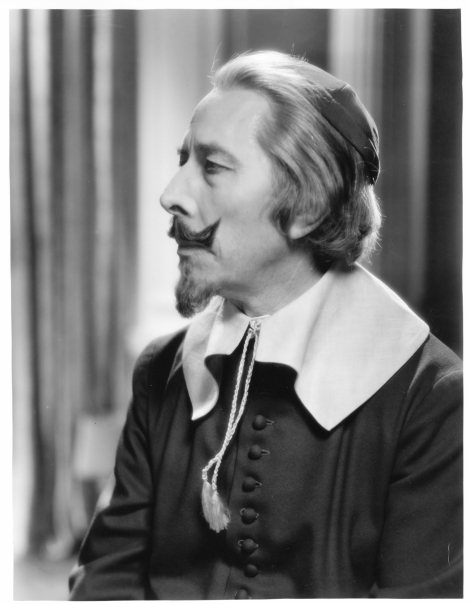
This is one of several portraits that Warners commissioned when Mr. A signed to make talking pictures in 1928. The unknown photographer has subtly softened the focus on the facial features without calling attention to it:

The portrait above is 4×5 and here is the 4×5 work negative it was made from (cropped due to my scanner):

And here is a painting that Gaumont-British studios made from the same photo a few years later:

I have not enhanced the colors – they are as vibrant now as they were 75 years ago.

Getting the flesh tones right marked the true artist, not too light and pasty, not too dark:

THE MILLIONAIRE (1931) by Bert Longworth

The still photographer often worked closely with the cinematographer on lighting. Here notice the “candlelight effect” that was a challenge to achieve due to the relatively low sensitivity of film stock of the time mandating lots of lights – there is minimal frontal lighting, the glow from the fireplace at right is noticeable, and most of the lighting comes from overhead:

VOLTAIRE (1933) with Doris Kenyon and Reginald Owen

A dramatic portrait by Elmer Fryer:

THE MAN WHO PLAYED GOD (1932)

An uncharacteristic pose of Mr. A, note the sharp focus on the face:

We’ve discussed the role of lighting, lenses and focal points, but what was the real secret that makes the work of these vintage photographers unattainable their by counterparts today? Ready? It was the size of the negatives they used. They didn’t use those handy 35mm rolls of film or larger rolls that produced negatives about 2 1/2 x 2 1/2 inches square. No, these da Vincis of da camera used gigantic negatives measuring 8 x 10 inches. In other words, those beloved 8×10 stills that film buffs admire are not enlargements from small negatives like today, they were contact prints!

Here’s an original 8×10 negative – and yes, it required a huge, bulky camera:

Most digital scanners today can’t handle these 8×10 monsters but the depth of field these negatives produced just can’t be duplicated with smaller size negatives. It’s the difference between painting a miniature or working on a large canvas

And here’s this negative turned into a print:

THE LAST GENTLEMAN (1934) with Rafaela Ottiano, Donald Meek, Frank Albertson, Janet Beecher, Charlotte Henry, Edna May Oliver, Ralph Morgan, and Mr. A.


(restored from a scrapbook clipping, circa 1934)

Published in: on March 19, 2011 at 10:46 PM  Comments (4)  
Tags: , , , , , ,

Detail from ALEXANDER HAMILTON lobby card

Published in: on February 3, 2011 at 2:01 AM  Leave a Comment  
Tags: , , ,